+852 2257 9331

+852 2257 9322

讓兒童在歡樂及無壓力中學習及成長

園訓:「教養孩童,使他走當行的道,就是到老他也不偏離。」箴言二十二章6節

May 2023

Categories
Parents Zone

How do you teach children correct pronunciation?

Source: Speech therapist, Miss Carley

When children learn a language, pronunciation is also an important aspect. There are many pronunciations in English that are not found in Cantonese and are difficult for both children and adults to master. How can parents teach children to pronounce English correctly? What are some tips to use?

The English tongue’s sounds can be difficult for children and even adults to master. We can try to use different cueing techniques to teach children to pronounce the sounds correctly. For example, parents can use visual cues, such as looking in the mirror with the child and showing him the tip of his tongue, placed between the two rows of teeth.

In addition, parents can also use verbal cues to clearly tell the child, “Put your tongue in the middle of your two rows of teeth,” so that they know what to do. When necessary, parents can also provide tactile cues, such as using a popsicle stick or spoon to touch the tongue and showing them where to place it for different sounds.

Parents can also try playing simple games with their children to train their listening skills, such as whether they can distinguish between right and wrong in terms of hearing. For example, intentionally mispronouncing a word: “Is ‘fank you’ correct? No, it’s not.” “Is ‘thank you’ correct? Yes, it is.”

This time we have to bite our teeth on the tongue or write the words “free” and “three” on a piece of paper, and then the parent reads out one of the words “three” “You show me which one” and reads “free”, “You show me which one”. If he knows how to distinguish, it will be clearer and easier for him to express himself.

After promoting to primary school, classmates are completely different. How can we assist the children in adapting?

Source: Psychologist, Dr. Lee Wai Tong

During the kindergarten years, children spend four years from N class to K3, and they will also make some friends, forming their own circles of friends. But after the summer break, when they will be promoted to primary school, everything can suddenly change. Some classmates may continue to attend the same school but may be placed in different classes, causing anxiety and discomfort.

Of course, some children who start primary school and make new friends may forget their good kindergarten classmates. But some children may need more time to develop their social skills, so they may be more concerned about their former kindergarten friends.

Parents can keep in touch with their child’s kindergarten friends, especially since most parents have access to kindergarten parent groups. When the child starts school in September, if they find that they don’t have as many friends to play and chat with as they did in kindergarten, they may start to develop a dislike for school. At this point, parents can help by organizing get-togethers, such as by telling a friend’s mother, “My son really misses your son.”


Let these two children develop a sense of fellowship during this transitional period. After they enter primary school and go through a longer period of time, they will also make new friends. However, during this transitional period, we also want to let them know that their good friends from kindergarten are still around, they haven’t disappeared. They will slowly let go of them as they make new friends in primary school.

But apart from the separation from their friends, they may also have some anxiety, to varying degrees. For example, if a child really doesn’t want to go to school, it can be troublesome for the mother, and the child may even cry when coming back home or refuse to change their school uniform. After all, their world has completely changed since they started first grade, with different teachers, environments, and more intense class schedules.

Usually, after school, a child might say to you, “I miss you so much today!” This sentence is actually a magic word. Where is the magic word? Many parents don’t know and will directly respond, “I miss you too.” However, the child doesn’t understand that when they say, “I miss you so much today!” after school, it actually indicates that they have had some difficulties today.

Going to school is actually very busy. They have to listen to lectures, do classwork, play during recess, have lunch, and participate in various activities. After 35 minutes, they have to switch to another teacher and learn new things. There is actually no space for them to sit and relax, thinking about their parents. But when something doesn’t go smoothly, they will think of their parents first because their parents are their strongest support.

So if a child proactively says, “I miss you so much today!” right after school, parents should ask them, “When do you miss me the most?” Then, we will be able to understand more clearly what they are facing. Is it when they have no friends to play with during recess? Is it when the teacher asks a question they don’t know how to answer? Is it when they don’t understand what they are learning? This will help us know how to better assist them.

What parents can do when children start to rebel?

Source: Founder of Family Dynamics and Marriage and Family Therapist, Rachel Ng

As children grow up, they begin to learn to say no and may seem to rebel against their parents in everything. This is related to the child’s temperament. When faced with a child who is very persistent, parents may easily feel that the child is not obedient or mischievous, but in fact, this only reflects some of their personality traits. If a child often says “No, no,” parents need to spend more time talking to them and mutually discussing each other’s needs.

Don’t think that just because a child is 5 years old, they are not capable of discussing it with you. In fact, we often speak to children in a one-way manner; that is, we think they are just children. When do they brush their teeth? When do they wash their faces? When do they go to bed? We all think so, and we tell them so! But when a child refuses to cooperate, parents can negotiate with them about everyone’s needs, such as if they don’t like to follow a certain routine or activity program. Parents can let the child express their own thoughts. When they have room to express their thoughts, their first feeling is acceptance from their parents, rather than criticism or rejection.

If a child hears their parents say, “Why don’t you listen to me again? Why don’t you do what I say?” They will feel accused and are likely to develop a sense of resistance, leading to a vicious cycle. To avoid this, parents should listen carefully to what their child is saying and thinking. Parents may think that if they listen to their child, they will only play and not brush their teeth or sleep. This is not necessarily the case. Children who are very persistent just want to express their own opinions and want their parents to understand, which does not mean that they cannot change their minds.

 As long as the child maintains a good relationship with his parents, his needs can be communicated to them, and they are willing to listen and respond by saying, for example, “If I can do it, I’m happy to cooperate with you. If I can help you, I’ll be happy to. But if I can’t, I hope you can help me finish my work quickly and give me some rest time.”

Children love their parents very much, and because of this good relationship, they are willing to cooperate with their parents’ needs and adjust their own needs. But if parents do not listen to their children, ignore their thoughts, and do not consider what they want, it will create a confrontational situation. For example, parents tell their daughter to eat her food cleanly, but she seems to deliberately make a mess. This may have already reached the edge of confrontation. Don’t enter into a cycle of confrontation.

In fact, at this stage, the mother should not criticize her daughter too much, even appreciate or find things her daughter can do and praise her, and spend more time listening to her needs, reducing or eliminating this confrontational behavior first. Then, rebuild trust with the child. When there is trust between everyone, we can listen to each other’s needs in every aspect of life. Both sides can look for new ways to satisfy each other’s needs, reduce confrontation, and gradually teach the child to consider not only their own needs but also their parents’ needs and make appropriate adjustments.

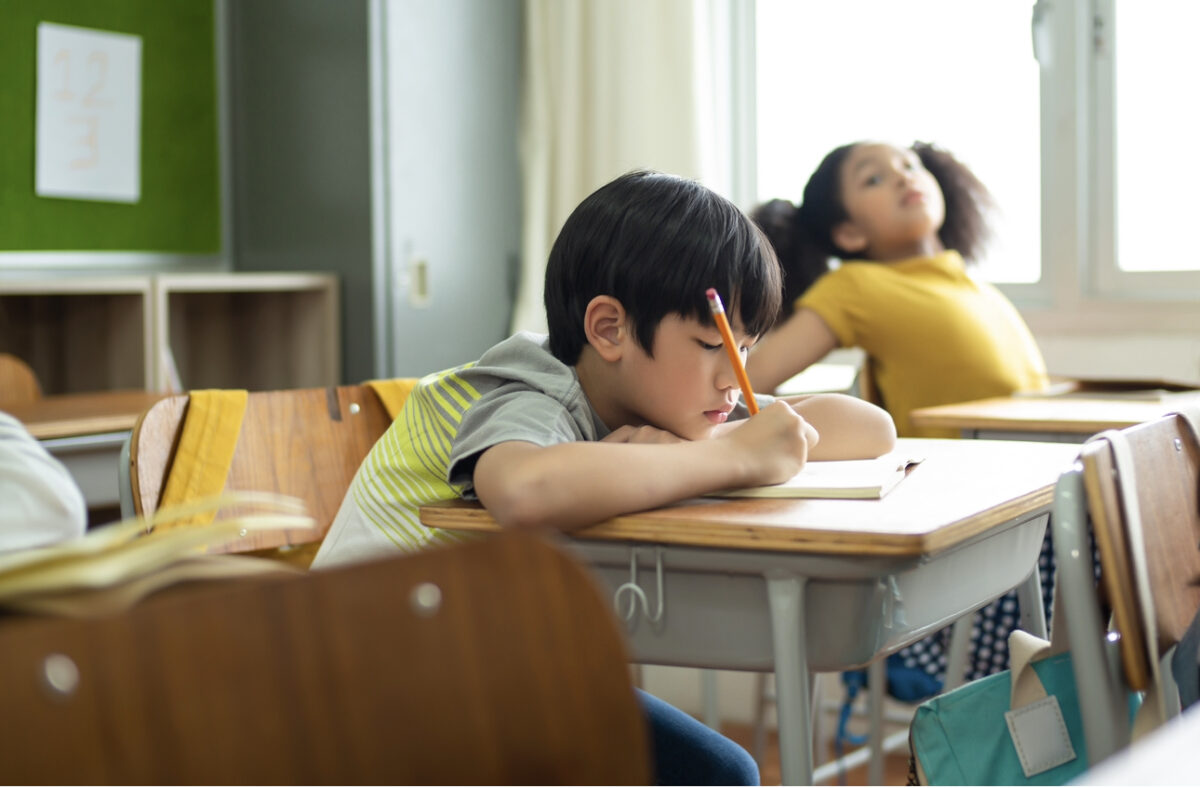
What is the reason behind a child being unable to sit still in class?

Source: School Supervisor’s Notes by author Wu Shan-ying

Children may have trouble sitting still in class due to either being too energized or being a gifted student or having ability issue. How do these two situations cause them to be unable to sit still, and how can parents help them?

For gifted students, they need to use two sensory systems at the same time to stabilize their attention. For example, if a gifted student needs to count and write down steps to solve a problem, how can they be encouraged to do so calmly? One method is to listen to music, and in fact, many adults also listen to music while working to calm their minds. When listening to music while working, it occupies two of your senses at the same time, so you don’t have spare capacity to command your hands or feet to move, which helps to keep you calm.

Another reason why some children are unable to sit still is due to ability issues. Simply put, if you ask a 3-year-old to do something at the level of a 7-year-old, it is beyond their abilities, but this is a common practice in Hong Kong. As children grow older, their self-awareness will relatively increase.

As I mentioned earlier with a reading comprehension exercise, a child already said, “This is too hard, I’m just a K3 student.” They already know they don’t understand, so asking them to do it anyway is meaningless. As a teacher, you should break down the article and teach it in parts to cultivate a child’s correct mindset. The child showed me the article and said, “I don’t understand even the first sentence.” I replied, “Then let’s skip it and focus on the main idea first.” The child gradually guessed the main idea with one or two understandable words, and eventually understood the content and purpose of the article.

Therefore, as long as a child feels capable of doing something, they will gradually read through the entire article and eventually realize that they are capable of understanding it. You need to determine the reason why a child cannot concentrate. some are too fast in thinking, some are incompetent, some are unable to hear, even if they concentrate, or they cannot control themselves. All of these reasons need to be identified and addressed.

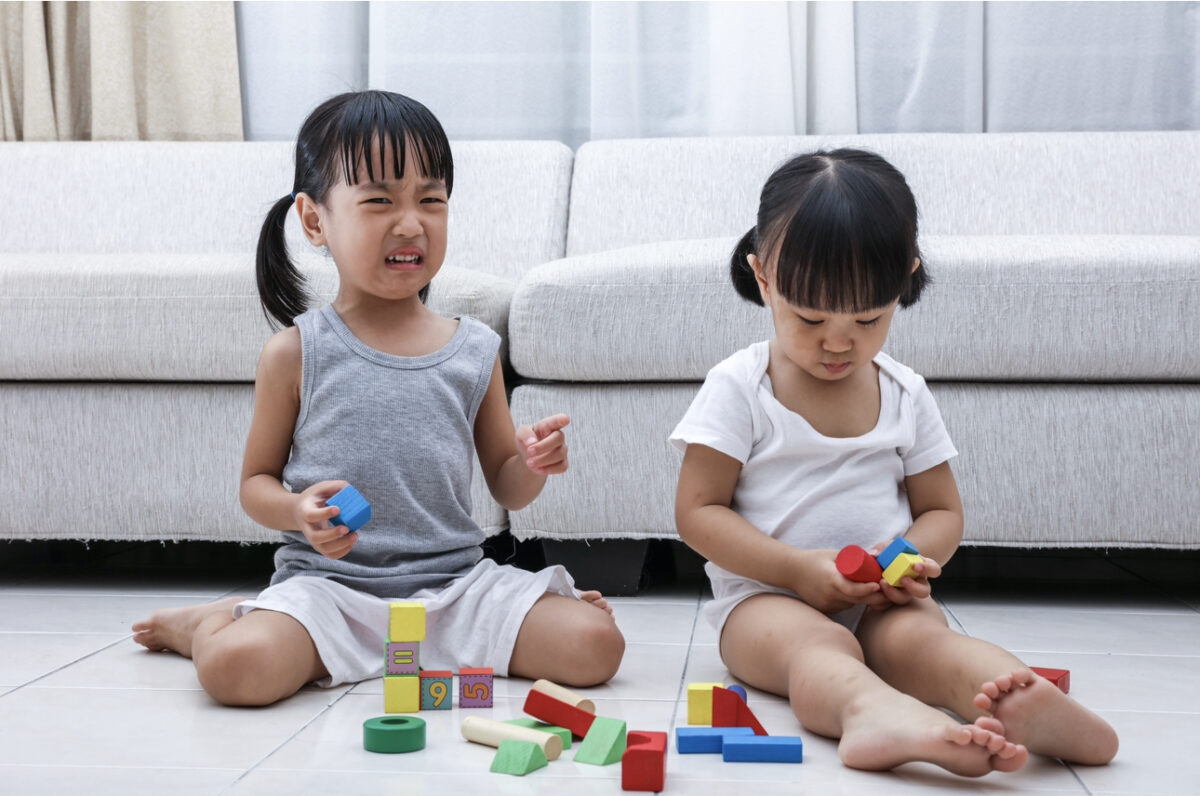
How do you resolve sibling conflicts peacefully?

Source: Family Dynamics, Individual, Marriage, and Family Therapist Kwong Wing Han

When there are two or more children in a household, conflicts and disagreements are normal. Parents may feel troubled, wondering how to make their children get along peacefully. Here are some tips.

Firstly, parents should try their best to create a warm and happy family atmosphere, emphasizing the concept of sharing. Secondly, we should regulate the behavior of children according to their age. Children under the age of 2 do not understand what they can and cannot do. Many times, they may behave in a way that upsets their older siblings. At this time, we need to comfort the older child and make him understand that his younger sibling cannot do it because of their limited abilities and lack of understanding. When they reach the age of understanding and obeying rules, parents will ask them to follow the rules just like their older siblings, so that the older child understands that the parents are not favoring their younger siblings.

In traditional thinking, older children should show consideration and make concessions to younger children. However, in fact, we should decide based on the child’s age and their ability to receive and understand things, not necessarily based on age. The so-called consideration and concession should be understood as empathy and understanding their needs.

If the younger sister wants to play with the older sister’s toy, mom can say to the older sister, “I know this toy is yours, and you treasure and love it, so you don’t want to let your sister play with it. But your sister doesn’t have this toy; she is younger than you, and she is happy to see you play with it and wants to try it too.” If the older sister agrees to let her sister play with it, it means she understands and empathizes with her sister’s needs. We can also say to the younger sister, “Because your sister loves you very much, she is willing to let you play with the toy,” and let her express gratitude to her sister.

However, children may not always be willing to share their toys. When they refuse to share, we should teach them to respect each other. On the basis of mutual respect, everyone can discuss and communicate together, and the child can decide who to share with. In addition, we should establish the principle of sharing. The older sister can share toys with the younger sister, and the younger sister also has the ability to share toys with the older sister. By sharing with each other according to a fair principle, the relationship between them will be more harmonious.

When sisters have conflicts, parents should remain neutral and not intervene. However, we often feel anxious and want to solve the problem for them. But the focus should be on accompanying them to solve their conflicts. We should give them the opportunity to express themselves, let them know that we understand their feelings, and allow them to handle the situation on their own.

Also, don’t overly emphasize on fairness because there is often no absolute fairness. If they both want to be hugged by mom, mom can say, “Mommy knows you both want to be hugged by mommy and feel comfortable this way. But mommy only has one pair of arms and can’t hold you both at the same time. Let’s think of ways to let both of you be hugged by mommy.”

We should let children know that having conflicts is not a problem, and having conflicts does not mean they don’t love each other. The most important thing is to learn how to solve problems. Their problem-solving experiences will be unforgettable lessons for them as they grow up, and will not damage their relationship.

Categories
Parents Zone Parents Zone Parents Zone Parents Zone Parents Zone Parents Zone Parents Zone Parents Zone Parents Zone

What should parents do when a 3-year-old child throws a tantrum because things don’t go their way?

Source: Clinical psychologist, Yu Kwok Ting, from Caritas Rehabilitation Service

Children often have their own ideas, but sometimes when they encounter something they don’t like, they may resort to crying and throwing a tantrum to try to get their way. However, a child’s crying can often hit a parent’s weak spot and make them give in, which actually sets off a vicious cycle.

We need to understand that the frequency of a child’s behavior is related to its consequences. Simply put, if we do something and the consequence is good, we are more likely to do that behavior again; if we do something and the consequence is bad, we naturally won’t do that behavior again.

Younger children cannot fully grasp their understanding of the world and what they should and should not do. They only have a vague concept, so when parents try to explain to them why they should or should not do something, children may not fully understand even after listening.

If a 3-year-old child is upset before bedtime, parents can set up a reward plan with them. Every child in each family is different, and parents can teach their child: “I will only ask you to go to bed three times at most every night. If you can go to bed within those three times, you will get a sticker or stamp for that day. When you have collected a certain number of stickers or stamps, you can exchange them for a reward.” The reward can be a gift or an activity, such as going to a special place with the family.

When a child refuses to sleep at night and only wants to watch TV, parents need to remind them: “This is the first time we’re reminding you to go to bed.” If they still refuse to go to bed, parents should remind them that they will get a sticker if they go to bed within three reminders. At the same time, parents should bring out a notebook and stickers to show the child. If the child still refuses to go to bed after the second reminder, parents should say, “This is the second reminder; please go to bed. You can still get a sticker if you go to bed now.” If the child still doesn’t comply after the third reminder, parents should say, “We’ve reminded you three times already, and you still haven’t gone to bed. We won’t give you a sticker, and we’ll have to put things away now.”

The child may become emotional and cry, and may even demand stickers or TV. At this time, it’s important for parents not to give in and let the child watch TV or receive a sticker. If the child is able to succeed in getting a sticker or watching TV, they will learn that if they cry for long enough, they will get a good result.

Parents need to be firm and prepared for a prolonged battle at this time. They can remind themselves that this is a difficult but ultimately beneficial process. When the child continues to cry without getting a sticker or TV, they will gradually learn that being emotional doesn’t work. Not only does it not work, but it also means they won’t get a sticker or watch TV, which is not good. Gradually, they will learn not to use this method and will try to do what their parents ask them to do in order to earn stickers.

Parents often feel that using reward programs or tempting children with prizes is not good, and they feel that it is bribery behavior towards children. However, the biggest difference between reward and bribery is time. Usually, bribery occurs when the child is already uncooperative and the parent offers a sticker if the child goes to bed now. This belongs to bribery. But rewards are predetermined in advance and not given when the child is throwing a tantrum or having a mood swing to motivate them to do something good.

Reward items are a way to increase their motivation. Reward items can be gifts or food. If parents feel that it is too materialistic, it can also be an opportunity for an activity or verbal praise. Verbal praise can also increase the child’s motivation. As the child grows up, this kind of reward may not need to be so externalized. They will gradually receive rewards from their parents’ words or actions, and it will become a reward in their own minds.

When they slowly do well, they no longer need external motivation. They will give themselves motivation and think, “I have grown up, I can do it, I am smarter.” So, the reward program does not need to be done for a lifetime, but we need to give them a small incentive when they do not understand the world and their values are not very strong at the beginning, and over time we can gradually reduce the rewards.

Finally, parents need to understand that there are many factors that need to come together for a reward program to be successful. The adults in the family also need to implement the reward program consistently. It cannot be just the father giving stickers while the mother does not.

Secondly, we need to follow through. Thirdly, some things need to be done immediately. For example, if something happens at night, we need to give stickers right away and not wait for a week to do so. Fourthly, we need to be flexible. If the child wants to change the reward item every time, we should cooperate and not give the same gift every month.

If parents have set up a reward program at home and feel that it is not effective, there may be some adjustments needed in these details. If parents feel that it is not very effective, they can seek advice from teachers, social workers in the community, or other professionals to discuss how to adjust the reward program to help children do well.


Is it important to establish a secure attachment with children?

Source: Specialist in psychiatry, Dr. Leung Yuen Shan 

Every time the child is sent to school, they cry non-stop and have a difficult time separating from their mother. This may be a sign of a lack of security. Many studies have shown that a secure attachment is a foundation for a child’s success in life. How can parents establish a secure attachment with their children?

 In fact, a secure attachment requires deliberate effort and a lot of hard work from the mother. A child’s trust in the world and their own confidence are closely related to their secure attachment to their mother.

 When a child doesn’t feel safe, they usually have trouble being apart from their mother. Usually, when a child is separated from their mother, they may cry and fuss a bit but can be easily calmed down. However, a child with an unstable sense of security may become very upset and throw tantrums quickly. This is a sign that parents need to work on establishing a sense of security.

So, how can parents establish a sense of security? First of all, the mother must take care of herself. The mother’s mental health is the foundation of everything. If the mother is not taking good care of herself, she will not be able to take care of her child. If she finds that she has a real emotional problem, such as high mood swings, irritability, crying, insomnia, or the inability to eat, she should deal with it as soon as possible for the sake of the child’s future.

 Children are constantly building a sense of security and trust in the world and people as they grow. Parents can continue to respond to and pay attention to their children during their childhood and establish more parent-child time through different activities to increase intimate communication. All of these efforts can help the child build confidence and a sense of security in the world.

How can parents help young children adapt to primary school life both psychologically and physically?

Source:  Professor Chiu Wing Kai, Chair Professor of Sociology at the Education University of Hong Kong.

It’s already been 3 months into 2023 and summer vacation will be coming soon, followed by the start of the new school year in September. For K3 students to start their primary school life. However, these students have spent most of their 3-year kindergarten education in online classes due to the pandemic, with little face-to-face interaction. How can parents help them adapt to their new academic and social life in terms of their psychological and physical well-being?

Students who are promoted to Primary 1 are at most at K2 level because they have not returned to school for at least one full year. There are many things they need to adapt to when transitioning from kindergarten to primary school. These include school schedules, daily routines, and learning styles that are vastly different from what they are used to. Kindergarten classes typically last for around 20 minutes, after which they move on to another subject, but in primary school, classes can be 35 minutes or longer, making it difficult for them to maintain their focus. All of these issues can create significant adaptation problems for young students.

So how can parents explain these changes to their children? Firstly, parents should not be too anxious, as many primary schools offer simulation courses and adaptation weeks for new students, as well as school visits. Primary schools are usually much larger than kindergartens, and young students may be excited about the various facilities and opportunities available to them. However, it is best to start talking to them once they begin school, as too much information too soon may be overwhelming. Simply telling them, “Yes, this is what school is like” is often enough.

Additionally, some things that young students may not be capable of now do not mean they cannot accomplish them, they just need time to grow and develop. Parents need to remember that every child has a different growth rate. After starting school, observe their emotional changes when they return home from school, and if you notice any issues, pay close attention to them

It takes time for young children to adapt, but sometimes parents also need to adapt. In kindergarten, we refer to it as the Homeroom(regular class location), where one teacher leads the class, and children usually only see one or two teachers. If parents need to participate or collaborate with the school, they can simply find that teacher. In primary school, each subject has different teachers, so if any issues arise, parents need to consider how to communicate with each teacher.

How do you deal with a child’s scoliosis?

Source: Spinal Neurologist, Dr. Wan Man Ho

Many children nowadays have spinal problems, including hunchbacks and scoliosis. If not treated in time, they may develop problems such as back pain, neck pain, and sciatica when they grow up.

In Hong Kong, 3 out of every 10 children suffer from scoliosis. This problem also worsens during the development period. The causes of scoliosis include congenital scoliosis, acquired scoliosis, muscle imbalances, and even poor posture.

During examinations, some children may discover that they have differences in leg length, pelvic displacement, or even lateral deviation of the spine or ribs. Chiropractors will use physical therapy and even chiropractic care to help these children improve the curvature of their spines.

In Hong Kong, conservative treatment for scoliosis includes wearing a brace, while more severe cases require surgery. If scoliosis is not treated or prevented from an early age, it can lead to conditions such as back pain, neck pain, or sciatica, and the affected area may accelerate degeneration. Therefore, scoliosis is a condition that needs to be taken seriously

Can children strengthen their limb muscles at home?

Source: Registered Physiotherapist, Hui Wing Yee

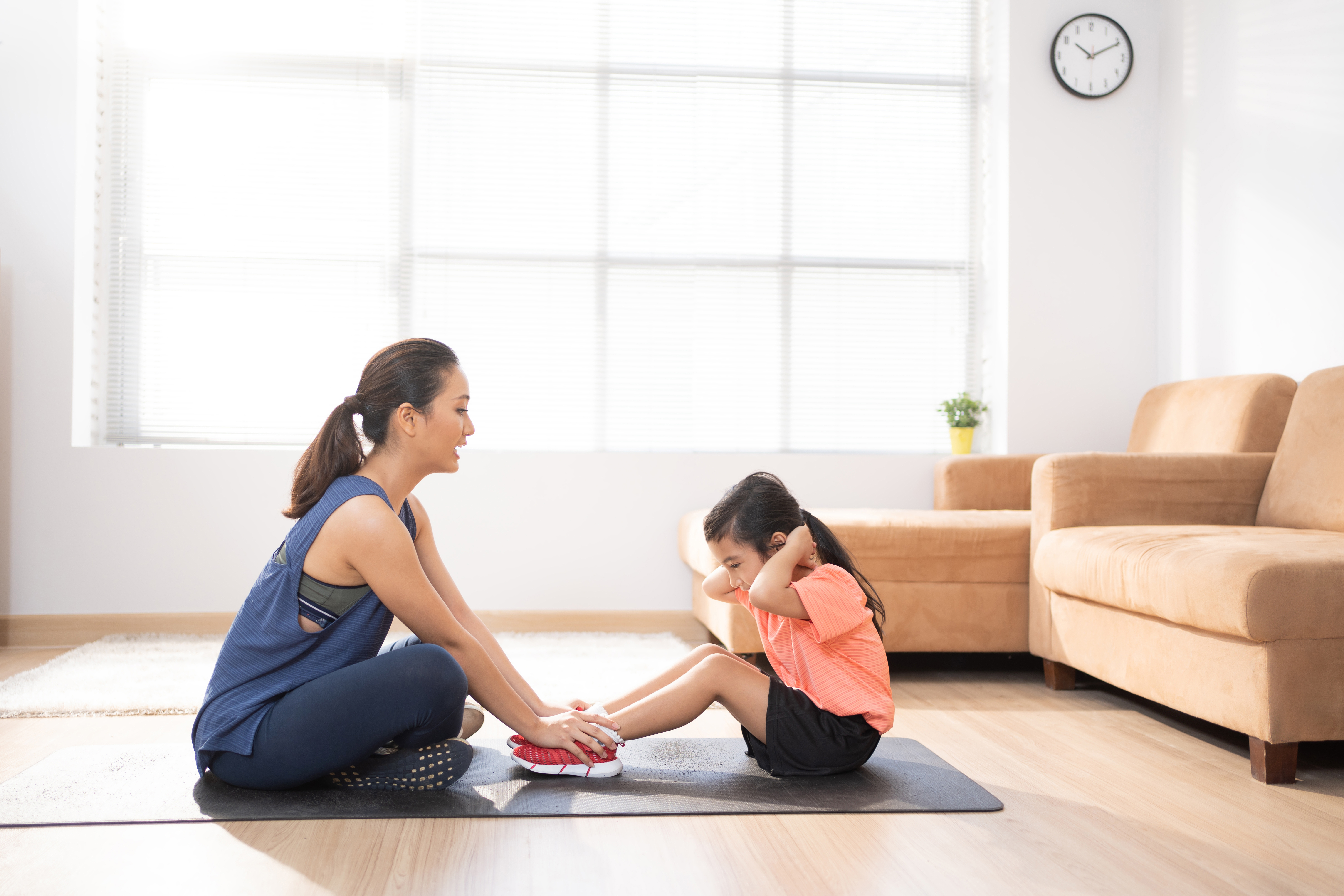
Children have a heavy academic workload and spend more time at home, losing many opportunities to exercise. However, the development of children’s limb muscles is very important, and some stretching exercises for the waist and upper limbs can be done at home.

The first set of exercises is the lunge and twist, which helps to exercise the core muscles and lower limb muscles. First, open your feet to hip width, place your hands on both sides of your body, step out with your right foot to maintain a 90-degree angle on both knees, open your hands with palms facing forward, slowly turn to the right, and hold for two seconds. Then return to the original position with hands hanging down, repeating on both sides ten times.

The second set of exercises is quadruped limb raises. These exercises help strengthen our back and limb muscles. If possible, use a yoga mat to avoid putting pressure on your knees. First, start on all fours with your hands shoulder-width apart and your knees hip-width apart. Lift your right hand and left leg straight out, creating a horizontal line. Tighten your back and abdominal muscles, hold for two seconds, then switch to your left hand and right leg. Alternate between both sides for a total of ten reps.