+852 2257 9331

+852 2257 9322

讓兒童在歡樂及無壓力中學習及成長

園訓:「教養孩童,使他走當行的道,就是到老他也不偏離。」箴言二十二章6節

April 2023

Categories
Parents Zone

How to effectively calm children when dealing with parent-child conflicts?

Source: Parenting Education Specialist, Ken Sir

From time to time, conflicts may arise between children and adults. In handling these conflicts, communication skills with children are very important, and there is a big difference between starting with “you” and starting with “I.”


Once, I was at the elevator entrance and saw a child trying to press the elevator button, but another child pressed it first. The child’s emotions immediately became volatile, and although the mother tried to bend down and deal with the situation, she found it difficult to calm the child’s emotions. What was involved in the situation?

This involves the mother using a few phrases, including “don’t cry”, “what do you want?” or “do you want me to go down to the next floor and let you press the button?” I want to remind parents that if they want to calm a child’s emotions, they should avoid using these types of phrases.

 If we want to calm a child’s emotions, we can try using “I” at the beginning of the sentence, such as “I see you…”, “I know that you really want…”, and “Mom and Dad understand you”. When a child hears these words from their perspective, they will feel that you are on their side rather than opposing them.

 In this way, through your body language—calming and hugging—it helps the child gradually learn to be calm and then slowly instill what you want to teach them. This would be very good.

What should I do when confronted with dishonesty in children?

Written by: Family Dynamics Psychological Counselor, Lai Shun Mei

Every time a child does homework, he or she falsely claims to have a stomachache, to go to the bathroom, or to go to sleep. Thousands of lies and excuses. Parents who value character development are naturally outraged because they have zero tolerance for dishonesty in their children. But why do children always avoid doing their homework? Why do they have to lie to cover it up?

Often, children avoid doing homework not because they don’t want to, but because they can’t. Children want to be good and smart, but when they find out they can’t do their homework, they think they are not smart enough. They can’t accept this and will lie to cover it up and avoid it. Generally speaking, children with normal intelligence but learning disabilities will have their academic performance affected to some degree, but they can excel in other areas as well. And regardless of their intelligence level, as long as they use the right approach, coupled with the right amount of training, they can also build the corresponding ability.

But why do people lie? When a person feels that he or she is in an uncomfortable situation, he or she will activate the defense mechanism to protect himself or herself. Lying is one of the ways to cope with a crisis by avoiding it. If parents want to help their children, they should allow them to tell the truth so that they can understand what their children really don’t understand.

How do you instill in children the courage to speak the truth? You have to let your child know that even if he is not smart enough, you will still love him so much, take him as your joy, be patient with him, and find ways to help him solve his problems together, thus building up his sense of security and making him feel at ease to reveal his inner uncertainties and difficulties. On the contrary, if his experience makes him think that he is not smart enough, which will lead to his mother’s anger and complaints, he will not dare to tell the truth and even activate his self-protection mechanism to protect himself with lies that adults can uncover at first glance.

At this point, the child will not only fail to protect himself but will also get into more trouble because the mother will be rehabilitated and will take the initiative to admit her mistake and promise not to lie again. But in fact, his homework difficulties are not resolved, creating a vicious cycle. Therefore, we encourage parents to learn to accept their children’s shortcomings so that they will have confidence in you and feel safe to open up to you

Why do children have a perfectionist personality?

Source : Psychiatrist, Dr. Hui Long Kit 

Perfectionistic children may have autism spectrum disorder or obsessive-compulsive disorder. In fact, perfectionism often stems from a child’s own high demands on themselves to do everything perfectly. When they cannot achieve perfection, they often blame themselves. For some children, when they score 99 out of 100 on an exam, they may cry endlessly at home because they are so worried about the one point they missed.

However, sometimes perfectionistic thinking does not come from the child, but rather from the parents. For example, if a child scores 99 out of 100, have you as a parent ever asked them, “Why didn’t you get 100 points?” If you say this, you are actually adding some perfectionistic elements to the child’s thinking. Children’s psychology is easily influenced by adults. If adults demand perfection in everything, children often internalize this pressure and turn it into self-demands. As a result, they may feel anxious when they cannot do what they want to do.

What are the consequences of anxiety? Anxiety can lead to chronic insomnia, extreme nervousness, frequent visits to the restroom, skin picking, rapid heartbeat, sweaty palms, trembling hands, and even a fear of going to school. Children may think, “What should I do? I missed one point. I threw away the notice. The teacher will scold me tomorrow. I don’t want to go to school.” These are common situations for perfectionistic children, not just those with anxiety disorders. Many children may also develop depression.

 Because they are unable to meet the demands of parents or teachers for a long time, they often cry, feel unhappy, and may even have suicidal thoughts. So how should parents deal with children who have perfectionism?

First, you need to be aware of the problem. Don’t assume that a child who is diligent and looks like a good student has no problems. The more obedient the student, the more careful you need to be to see if their demands on themselves are too high.

Second, parents should be aware of themselves. Are you perfect? Did you do everything perfectly when you were young? Do you do everything well every day? Do you do everything perfectly at work? Has your boss ever criticized you for not doing a good job? If you can’t even achieve perfection yourself, why do you expect your child to do so?

Third, you should pay attention to whether a child with perfectionism has symptoms of anxiety and depression. If, as stated above ,the child has trouble sleeping, shakes, has a fast heartbeat, sweats, picks at their skin, goes to the bathroom frequently, or has negative thoughts or even suicidal ideas, then you must take them to see a doctor. If anxiety and depression worsen, the consequences can be very serious.

“Is there a problem with a boy playing with “girl” toys if he likes them?”

Source: Children’s Play Therapy Instructor Lai Shun-Mei

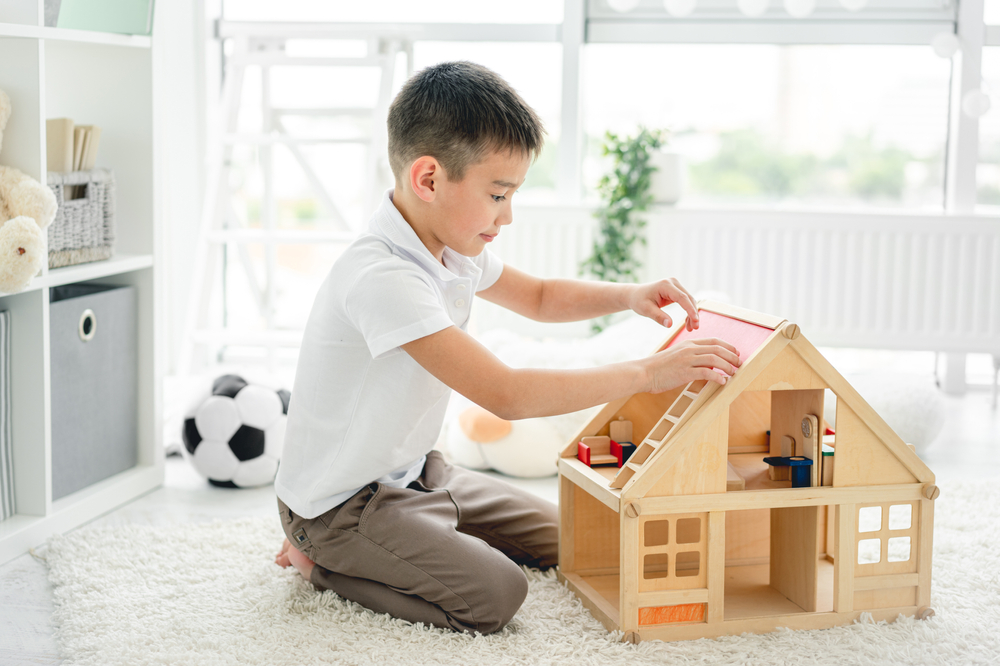
Little boy likes princess books and models, and also likes pink.

There are many types of dolls and toys that children like, and many parents may worry that their son likes princesses and pink or worry that their daughter likes to play with toy cars. What is this worry? Do parents really need to worry? We are used to seeing girls wearing pink dresses and hats, but when we see them playing with fire trucks and swords, we feel uneasy. This is actually called “gender role expectations” in psychology.

Gender role expectations refer to the social and cultural expectations that certain genders engage in certain activities. Therefore, it is normal for everyone to have certain gender role expectations for their children. But we need to be aware that if we turn these expectations into innate views of certain types of people, it will be easy to get rid of the differences between people and what makes them unique.

“Gender role stereotyping” means teaching boys and girls how they should act and figuring out their interests and personalities based on their gender. Gender role stereotyping can limit their innate potential for development. If we want to cultivate children who have diverse interests, creativity, and a balanced and healthy personality, we must protect their freedom to explore. We especially need to pay attention to whether they are subjected to verbal bullying from others in society during this exploration process.

Parents may also worry about their children’s gender identity. Gender identity refers to the internal recognition of which gender one belongs and the desire to live and express oneself in that gender. This is a personal cognitive development issue. As children grow older and their brains develop, they learn and recognize more about themselves and society, gradually clarifying their gender identity. The choice of toys and colors alone cannot indicate a child’s gender identity difficulties, as toys do not have gender. Whether they choose to play with cars or dolls, they are expressing their imagination and sharing their stories. Therefore, as parents, we should relax and listen to our children’s emotions, and enjoy the time spent playing with and accompanying them.

After promoting to primary school, classmates are completely different. How can we assist the children in adapting?

Source: Psychologist, Dr. Lee Wai Tong

During the kindergarten years, children spend four years from N class to K3, and they will also make some friends, forming their own circles of friends. But after the summer break, when they will be promoted to primary school, everything can suddenly change. Some classmates may continue to attend the same school but may be placed in different classes, causing anxiety and discomfort.

Of course, some children who start primary school and make new friends may forget their good kindergarten classmates. But some children may need more time to develop their social skills, so they may be more concerned about their former kindergarten friends.

Parents can keep in touch with their child’s kindergarten friends, especially since most parents have access to kindergarten parent groups. When the child starts school in September, if they find that they don’t have as many friends to play and chat with as they did in kindergarten, they may start to develop a dislike for school. At this point, parents can help by organizing get-togethers, such as by telling a friend’s mother, “My son really misses your son.”

Let these two children develop a sense of fellowship during this transitional period. After they enter primary school and go through a longer period of time, they will also make new friends. However, during this transitional period, we also want to let them know that their good friends from kindergarten are still around, they haven’t disappeared. They will slowly let go of them as they make new friends in primary school.

But apart from the separation from their friends, they may also have some anxiety, to varying degrees. For example, if a child really doesn’t want to go to school, it can be troublesome for the mother, and the child may even cry when coming back home or refuse to change their school uniform. After all, their world has completely changed since they started first grade, with different teachers, environments, and more intense class schedules.

Usually, after school, a child might say to you, “I miss you so much today!” This sentence is actually a magic word. Where is the magic word? Many parents don’t know and will directly respond, “I miss you too.” However, the child doesn’t understand that when they say, “I miss you so much today!” after school, it actually indicates that they have had some difficulties today.

Going to school is actually very busy. They have to listen to lectures, do classwork, play during recess, have lunch, and participate in various activities. After 35 minutes, they have to switch to another teacher and learn new things. There is actually no space for them to sit and relax, thinking about their parents. But when something doesn’t go smoothly, they will think of their parents first because their parents are their strongest support.

So if a child proactively says, “I miss you so much today!” right after school, parents should ask them, “When do you miss me the most?” Then, we will be able to understand more clearly what they are facing. Is it when they have no friends to play with during recess? Is it when the teacher asks a question they don’t know how to answer? Is it when they don’t understand what they are learning? This will help us know how to better assist them.


Categories
Parents Zone Parents Zone Parents Zone Parents Zone Parents Zone Parents Zone Parents Zone Parents Zone Parents Zone

What should parents do if their children are being teased and bullied?

Source: Psychologist, Lee Wai Tong

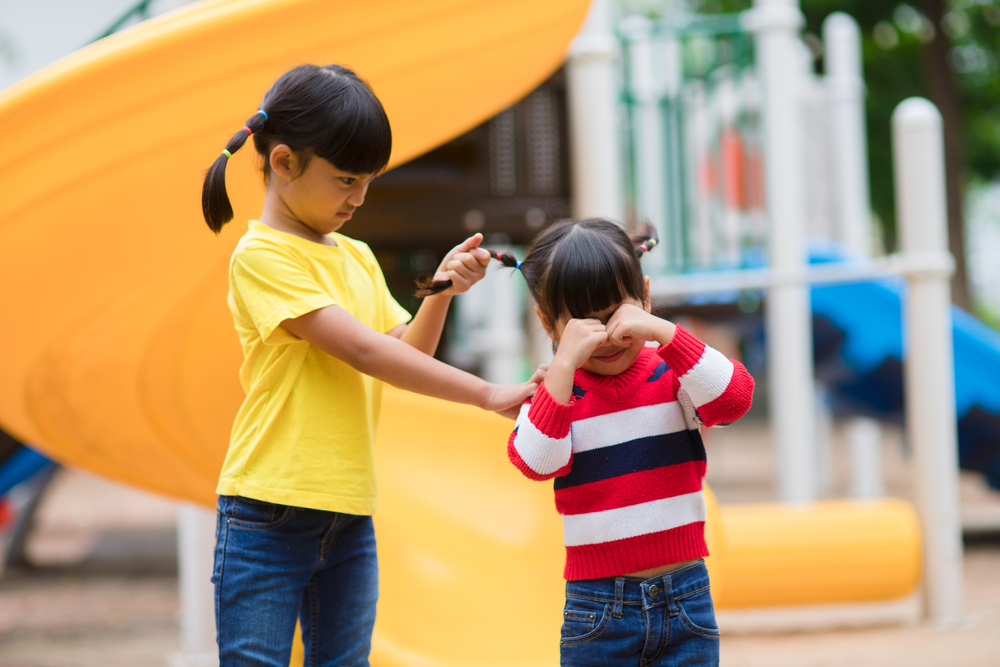
Currently, schools have fully resumed classes, and children have more time to spend with their classmates. Sometimes, children may be teased or bullied at school. When they don’t know how to express these emotions, they may react with aggressive behavior, which may be misunderstood by teachers.

For example, in a class of children playing together, one child may be teased for not performing well. At this moment, the child may not know how to handle the feeling of being teased or bullied, so when given the opportunity, the child may push or kick things, or even lie on the ground and scream. When the teacher arrives and sees this scene, they may naturally think that the problem lies with the child and may scold or lecture them. However, the teacher may not have noticed what happened before the incident.

When facing bullying or teasing, children often don’t know how to ease their feelings, which becomes a headache for many parents. In fact, when children are bullied or teased in daily life, they usually seek comfort from their parents first. If parents can comfort their children appropriately, such as if the child says to their mother, “Mom, they are making fun of me,” and the mother can comfort the child by patting them and saying, “Yes, sometimes some kids do that; it’s okay.” At this moment, it is a critical time, and the child will internalize this comforting feeling.

 When the child returns to school and is teased again, because they received comfort from their parents before, they can comfort themselves or even ignore others’ teasing and continue playing or doing their own thing. This reduces the possibility of unnecessary misunderstandings by the teacher, who may think the child is misbehaving, pushing others, kicking things, or screaming. Of course, on the other hand, if the teacher can timely ask the child about the cause and effect of the incident, it is also a good method to let the child express their grievances and calm their emotions.

Can mindfulness also help stabilize children’s emotions?

Registered clinical psychologist, Dr. Felicia Lee 

Recently, many people have been learning mindfulness to manage their emotions and think more clearly. However, mindfulness can also help us stabilize children’s emotions. Mindfulness, also known as “jing-nim” in Chinese, is a concept that combines Eastern philosophy and Western science. Mindfulness is about consciously and non-judgmentally focusing our attention on the present moment. We are aware of where our focus is at this moment, and we do not think about whether something is right or wrong. We just observe and describe. So how can we use mindfulness to help stabilize children’s emotions? 

The most important thing is to stop first. This requires us to practice regularly, and through mindfulness practice, we will know what methods can be used to effectively stop ourselves or our children. Because sometimes children will stop when they hear their mother shout, but what can be done to stop them when their mothers are not around or when no one is around to advise them? This is an important thing we can practice with mindfulness.

The second step is observation. What kind of mindset should we use to observe? We should observe with a non-judgmental mindset. When a child has emotions, we usually see their emotional outburst, and sometimes we have thoughts or critical words in our minds. If we describe this thought with a non-judgmental mindset and also feel our own emotions, we can see the child’s real needs through their behavior.

The third step is to use language to describe your current feelings or what is happening at the moment because when you use words, it will calm down the center of your emotions.

I remember one time when two brothers were arguing, and one of them stretched out his foot, which began to provoke the other, who then slowly became angry. They would kick each other, at first lightly and then with more force. Actually, when you see this kind of situation, you will feel very angry.


First, do not stop them, because when you stop them, you are characterizing one person as wrong, and after you characterize them, one of them may become even angrier. The worst thing is that they may both become angry together and say, “We’re just playing; why are you taking it so seriously?” So calm yourself down first, and then ask them casually, “What’s happening now?” Sometimes they may answer you, which is already good. If they cannot answer and are still angry, you can separate them, which is also okay.

“Does learning mindfulness help in rediscovering the strengths of children?”

Source: Registered Clinical Psychologist, Yiu Fong Lee


Parents often encounter various behavioral problems with their children, which can be very troubling. For example, they ask their child to do homework, but the child doesn’t do it; they ask the child to eat, but the child sits there playing instead. When children display many uncooperative behaviors, parents become very angry and may use blaming or punishing methods to deal with them. In times of great distress, children become even more uncooperative because they feel their parents are annoying and only have negative evaluations, causing their behavior to become increasingly uncooperative and disobedient. In the practice of mindfulness, parents can learn to carefully observe what is happening at the moment without any criticism, and then try to connect with their child wholeheartedly and notice any good qualities.


In the mindfulness parenting group, we encourage parents to use their five senses, including sight, hearing, taste, touch, and smell, to experience mindfulness while eating. For example, taking a piece of raisin and putting it in your mouth, feeling its texture at that moment, and noticing any changes. Through our careful observation, we will discover that raisins are actually very sweet, and they will slowly melt in our mouths.


https://www.shutterstock.com/zh/image-photo/cheerful-young-asian-girl-eating-health-1938380536 


We can apply this mindset to our interactions with children in daily life, meaning that in addition to their uncooperative behavior, tantrums, or emotional outbursts, we should observe them carefully to see if there are any other things that other parents might not notice. In the mindful parenting group, one mother shared that besides being angry when her son didn’t listen to her, she also noticed that he was willing to help her carry heavy objects or food at times, showing that he cared for her.


Some mothers even mentioned that their sons may be sensitive to certain sounds, but during the New Year’s vegetable-grabbing game, they would try their best to grab the vegetables and bring them back to their mothers because they wanted them to be healthy and safe. The mothers felt that their children loved them very much, so they paid more attention to the good things their children did or the times when they cooperated. For example, if a child refused to do homework ten times but then was willing to do it or quietly read once, the mother would appreciate and tell the child, “You were very focused today, and I appreciate that.” Over time, the child will realize that he or she can do well, and the mother won’t be so annoying or only focus on the bad things the child does. Instead, the mother will focus on the good things the child does, and the child’s behavior will gradually get better.

https://www.shutterstock.com/zh/image-photo/asian-happy-smiling-mother-put-her-1847632321 


In clinical practice, we often see that in parent-child interaction, when parents can sense the subtle aspects of daily life, such as what their children are willing to give, cherish, or when they exhibit good behavior, it can greatly help improve the interaction and relationship between the two. Additionally, when children feel positive about themselves, their confidence will also improve.

How do parents show love to their children?

Source: Parenting Education Specialist, Ken Sir

Parents may worry that expressing too much love to their children will spoil them and therefore do not know how to express love to them. Generally speaking, Chinese are more introverted and often dare not express their love. Especially when you originally wanted to express that you were very worried about your child, it often turns into another attitude.

Once, I saw a mother and her child get lost in Shatin and then reunite. What was the mother’s behavior like after the reunion? She grabbed the child’s hand and hit him while saying, “I couldn’t find you earlier; do you know how scared I was? I was so worried. What would I do if I didn’t find you?”

In fact, everyone knows that the mother loves her child, but the child doesn’t feel it. I often share an example during lectures to express love. When I was young, my father ordered a drink, but because money was tight, he asked the waiter to bring an extra cup after ordering one hot drink. He kept pouring the drink back and forth in front of me, trying to cool it down quickly so that the child wouldn’t burn his mouth and could drink it faster. But I found that when children ask their parents or when I asked many students’ parents, they would answer, “This will make it cool faster.”

When responding to children, parents should express their feelings at the deepest level: “I love you; why would I do this if I didn’t love you? Am I doing it for someone else? For another child? So in fact, there are many things in our lives that can express love, but there is one thing that must be remembered. If you are afraid of being overindulgent, remember the following two points:

First, if the child can do something, let them do it. You should not fight to do it. Second, when the child makes a mistake, we should correct them. In the process of correction, try to be gentle and firm. When seriousness is needed, be serious. But remind the child to say the solution, not just say no or that it’s wrong. Otherwise, the child will not progress.

How can eating habits make your child’s skin healthier?

Source: Registered Dietitian (Public Health) (UK), Ng Pui-Yu

Many kids have dry skin or even eczema, and their parents work hard to find the right moisturizers and other skin care products for them. In fact, in addition to topical skincare products, we should also pay attention to children’s diets. The most direct way, of course, is to drink more water. How much water should be drunk?


In fact, our body’s need for water is deeply influenced by the weather. For example, in dry weather, we need more water, as well as to account for children’s activity levels and how much they sweat. The water content in food also affects their need for water. If a child urinates every 3 to 4 hours and the urine is light yellow with no strong odor and the stool is not very hard and does not cause difficulty during bowel movements, it usually means that their water intake is sufficient.

For children aged 2 to 5, they need about 4 to 5 cups of fluid a day, and water should be the main source. Unsaturated fatty acids, like omega-3, are also important for maintaining the integrity of cell membranes, which keep harmful substances out and keep the skin moist and flexible. Omega-3 fatty acids can also help calm immune responses that are too strong in people with skin allergies or eczema.


We should also avoid certain foods, such as candies, cookies, and white bread, which are refined foods. Instead, we should choose low-glycemic index foods, such as brown rice and whole wheat bread, which are important for controlling sensitive conditions. Antioxidants, including common vitamins A, C, and E, are also important and can be found in fruits, vegetables, and nuts of different colors, making them great sources of antioxidants.

In summary, to have healthy skin, in addition to having enough water, you should eat high-fat fish such as salmon or yellow croaker twice a week. You can also replace some cookies and candy with plain nuts, fruits, and so on, and it is ideal to eat a variety of vegetables and fruits.

By the way, if a child’s chewing ability is not well developed, there is a chance of choking when eating nuts. Therefore, we should choose some smaller nuts, such as pine nuts, which are also a good option.