+852 2257 9331

+852 2257 9322

讓兒童在歡樂及無壓力中學習及成長

園訓:「教養孩童,使他走當行的道,就是到老他也不偏離。」箴言二十二章6節

cs_admin

“Does learning mindfulness help in rediscovering the strengths of children?”

Source: Registered Clinical Psychologist, Yiu Fong Lee


Parents often encounter various behavioral problems with their children, which can be very troubling. For example, they ask their child to do homework, but the child doesn’t do it; they ask the child to eat, but the child sits there playing instead. When children display many uncooperative behaviors, parents become very angry and may use blaming or punishing methods to deal with them. In times of great distress, children become even more uncooperative because they feel their parents are annoying and only have negative evaluations, causing their behavior to become increasingly uncooperative and disobedient. In the practice of mindfulness, parents can learn to carefully observe what is happening at the moment without any criticism, and then try to connect with their child wholeheartedly and notice any good qualities.


In the mindfulness parenting group, we encourage parents to use their five senses, including sight, hearing, taste, touch, and smell, to experience mindfulness while eating. For example, taking a piece of raisin and putting it in your mouth, feeling its texture at that moment, and noticing any changes. Through our careful observation, we will discover that raisins are actually very sweet, and they will slowly melt in our mouths.


https://www.shutterstock.com/zh/image-photo/cheerful-young-asian-girl-eating-health-1938380536 


We can apply this mindset to our interactions with children in daily life, meaning that in addition to their uncooperative behavior, tantrums, or emotional outbursts, we should observe them carefully to see if there are any other things that other parents might not notice. In the mindful parenting group, one mother shared that besides being angry when her son didn’t listen to her, she also noticed that he was willing to help her carry heavy objects or food at times, showing that he cared for her.


Some mothers even mentioned that their sons may be sensitive to certain sounds, but during the New Year’s vegetable-grabbing game, they would try their best to grab the vegetables and bring them back to their mothers because they wanted them to be healthy and safe. The mothers felt that their children loved them very much, so they paid more attention to the good things their children did or the times when they cooperated. For example, if a child refused to do homework ten times but then was willing to do it or quietly read once, the mother would appreciate and tell the child, “You were very focused today, and I appreciate that.” Over time, the child will realize that he or she can do well, and the mother won’t be so annoying or only focus on the bad things the child does. Instead, the mother will focus on the good things the child does, and the child’s behavior will gradually get better.

https://www.shutterstock.com/zh/image-photo/asian-happy-smiling-mother-put-her-1847632321 


In clinical practice, we often see that in parent-child interaction, when parents can sense the subtle aspects of daily life, such as what their children are willing to give, cherish, or when they exhibit good behavior, it can greatly help improve the interaction and relationship between the two. Additionally, when children feel positive about themselves, their confidence will also improve.

Categories
Parents Zone

How do parents show love to their children?

Source: Parenting Education Specialist, Ken Sir

Parents may worry that expressing too much love to their children will spoil them and therefore do not know how to express love to them. Generally speaking, Chinese are more introverted and often dare not express their love. Especially when you originally wanted to express that you were very worried about your child, it often turns into another attitude.

Once, I saw a mother and her child get lost in Shatin and then reunite. What was the mother’s behavior like after the reunion? She grabbed the child’s hand and hit him while saying, “I couldn’t find you earlier; do you know how scared I was? I was so worried. What would I do if I didn’t find you?”

In fact, everyone knows that the mother loves her child, but the child doesn’t feel it. I often share an example during lectures to express love. When I was young, my father ordered a drink, but because money was tight, he asked the waiter to bring an extra cup after ordering one hot drink. He kept pouring the drink back and forth in front of me, trying to cool it down quickly so that the child wouldn’t burn his mouth and could drink it faster. But I found that when children ask their parents or when I asked many students’ parents, they would answer, “This will make it cool faster.”

When responding to children, parents should express their feelings at the deepest level: “I love you; why would I do this if I didn’t love you? Am I doing it for someone else? For another child? So in fact, there are many things in our lives that can express love, but there is one thing that must be remembered. If you are afraid of being overindulgent, remember the following two points:

First, if the child can do something, let them do it. You should not fight to do it. Second, when the child makes a mistake, we should correct them. In the process of correction, try to be gentle and firm. When seriousness is needed, be serious. But remind the child to say the solution, not just say no or that it’s wrong. Otherwise, the child will not progress.

How can eating habits make your child’s skin healthier?

Source: Registered Dietitian (Public Health) (UK), Ng Pui-Yu

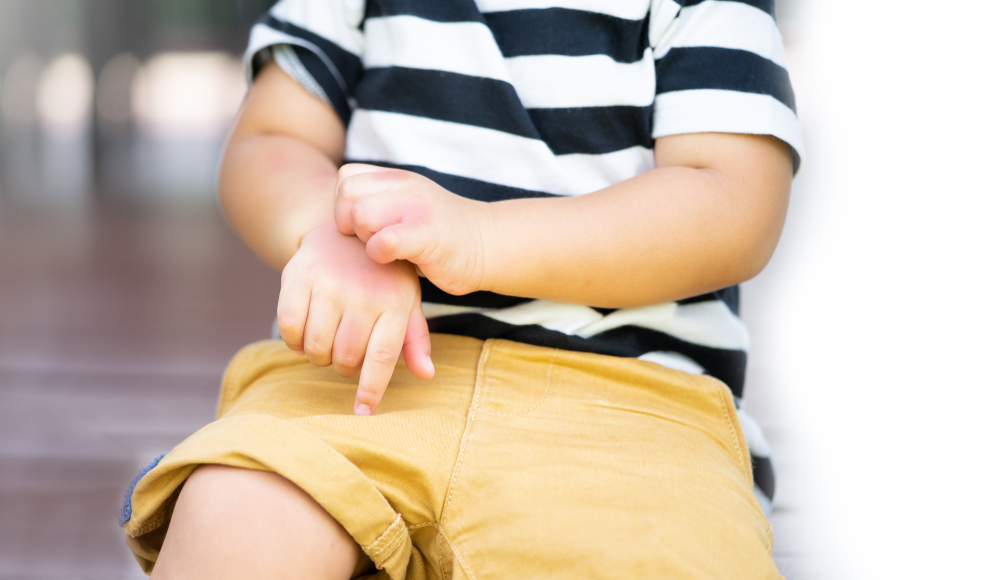
Many kids have dry skin or even eczema, and their parents work hard to find the right moisturizers and other skin care products for them. In fact, in addition to topical skincare products, we should also pay attention to children’s diets. The most direct way, of course, is to drink more water. How much water should be drunk?


In fact, our body’s need for water is deeply influenced by the weather. For example, in dry weather, we need more water, as well as to account for children’s activity levels and how much they sweat. The water content in food also affects their need for water. If a child urinates every 3 to 4 hours and the urine is light yellow with no strong odor and the stool is not very hard and does not cause difficulty during bowel movements, it usually means that their water intake is sufficient.

For children aged 2 to 5, they need about 4 to 5 cups of fluid a day, and water should be the main source. Unsaturated fatty acids, like omega-3, are also important for maintaining the integrity of cell membranes, which keep harmful substances out and keep the skin moist and flexible. Omega-3 fatty acids can also help calm immune responses that are too strong in people with skin allergies or eczema.


We should also avoid certain foods, such as candies, cookies, and white bread, which are refined foods. Instead, we should choose low-glycemic index foods, such as brown rice and whole wheat bread, which are important for controlling sensitive conditions. Antioxidants, including common vitamins A, C, and E, are also important and can be found in fruits, vegetables, and nuts of different colors, making them great sources of antioxidants.

In summary, to have healthy skin, in addition to having enough water, you should eat high-fat fish such as salmon or yellow croaker twice a week. You can also replace some cookies and candy with plain nuts, fruits, and so on, and it is ideal to eat a variety of vegetables and fruits.

By the way, if a child’s chewing ability is not well developed, there is a chance of choking when eating nuts. Therefore, we should choose some smaller nuts, such as pine nuts, which are also a good option.

Learn English from games without difficulty

Source: Speech therapist, Miss Carley

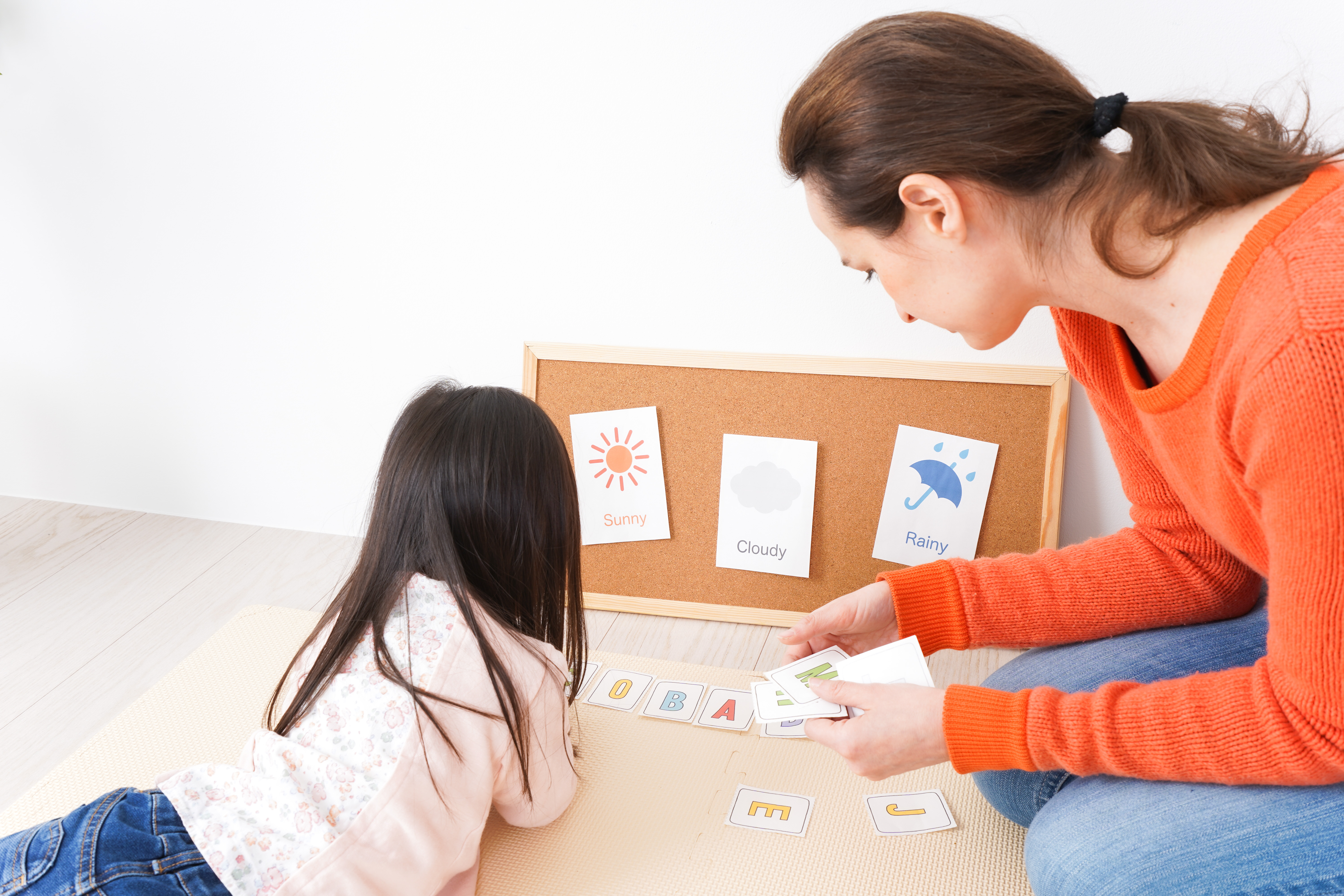
Often, we want children to learn English vocabulary, which may be difficult and boring for them. In fact, parents can try to create some simple games for children to learn these English words through the process of playing.


The first game is called “Covering the Card.” It is similar to the card game we usually play. Parents can write some words that children need to learn on white paper and draw more sheets with laughing faces. How do I play it? To begin, we must mix the cards and distribute them evenly to each player; for example, each parent and child will receive four cards. Then, take turns playing the top card. For example, if this card is drawn, read out the word, explain its meaning, and use the word in a sentence. But if a laughing face is drawn, the player needs to quickly slap the card. If the player is slower, they must take all the cards and keep them in their hands. The player with no cards in their hand wins.

The second game is called “passing three levels.” It is actually similar to the game we usually play, but this time we have pre-written some vocabulary words in the nine squares. Then, we take turns with the child to draw some crosses or circles. For example, if I draw a cross here, I need to read, explain, and make a sentence with the vocabulary word in this square. Then it’s the parent’s turn; they might use a circle, just like in “passing three levels.” The first person to connect three cards in a straight-line win.

The third game is a memory matching game. Parents can write some Chinese characters that children need to learn on white paper and write each character twice. Parents can randomly place pairs of word cards on the table. Then parents can ask the children to take a look and remember them, and then flip the cards over. Parents and children take turns flipping over two cards. If they match, the child is asked to use the word to make a sentence, explain its meaning, and read it out loud.

Punishment or reward?

Source: Dr. Law Wai Pak, Assistant Professor of the Department of Psychology at the Education University of Hong Kong and a registered educational psychologist

When it comes to getting their kids to study, many parents feel very frustrated and wish their kids could be self-motivated. When it comes to improving their children’s motivation to learn, many parents first think of using rewards and punishments. But which is more effective, using a stick or a carrot?

In fact, I believe that most modern parents understand that punishment is not a very effective method because it can hurt children’s bodies and undermine their self-esteem. Does this mean that using rewards is more effective? For example, “If you finish your book, you can have a pack of chips.” However, this method also carries hidden risks.

First of all, this reward often has to be constantly increased in order to be effective. Secondly, when there are no rewards, children will not automatically be motivated to study. Besides using punishment and reward, is there a third way?

Here, I would like to introduce three treasures to everyone: “sense of competence,” “sense of autonomy,” and “sense of relatedness.” What is the sense of competence? It is the belief that a child can learn new things and handle challenges. Parents can choose some challenging learning materials or homework that is not too difficult or easy for their children. For example, when they come to the library to choose a book, they should not choose a book with too many difficult words. Children should at least understand 70–80% of the words in the book. In addition, parents should provide more positive and helpful feedback to their children, appreciate their efforts, and brainstorm problem-solving methods with them.

The second thing is the sense of autonomy. Sometimes children may have a high sense of ability, but they will not learn autonomously when they feel oppressed. What can parents do to enhance their children’s sense of autonomy? You can let them make more decisions, encourage them when they study, and only offer help when they need it. Also, don’t give them too many instructions or use rewards and punishments inappropriately, as this can erode their sense of autonomy.

Third, it’s the sense of relationship. Since birth, everyone has had a need to be loved and cared for, and when children feel loved and cared for, they develop trust in their parents. When you ask them to study again, they will take it more seriously. How can parents strengthen their sense of relationship with their children? Listen to them more often, express empathy, and interact with them with a warm attitude. The most important thing is unconditional love, which means loving them regardless of whether their grades are good or bad.

If next time we urge children to study but they refuse, we can start with these three aspects: autonomy, competence, and relatedness. Stop and think: How can I satisfy the child’s needs in these three areas? When these three needs are met, children will naturally and automatically learn and grow.

Full resumption of lessons. What should we do if children keep crying?

Source: Registered Clinical Psychologist, Yiu Fong Lee

Faced with the full resumption of classes, parents may face some very troubling issues. For example, children may cry during school and not want to be separated from their parents, or they may open their eyes the next morning and say, “Mum, I don’t want to go to school.” Some children may also have nightmares at night. What should we do when a child is afraid of going to school or does not want to be separated from his or her parents?

If a child really does not want to go to school, parents can ask him, “What are your reasons for not wanting to go to school? Get to know him. The reason may be that he is afraid of being separated from his parents, that he feels uncomfortable in an unfamiliar environment, or that he is afraid of what his teachers and classmates will be like. What should we do? Here are a few ways to help.

Firstly, read some parent-child picture books with your child, in which there are different school scenarios, to help your child pay attention to what school is actually like in advance. We can also use some dolls to help children learn how to play the role of the child and what he can do to calm his emotions when he is worried about going to school. What would he do to help calm his emotions? For example, the doll may say to himself, “I’m going to take a breath and calm myself,” or the doll may say to himself, “I’ll see my mommy and daddy soon tonight”, so that he can calm himself down for a while.

Secondly, we can help your child get used to the school environment in advance so that he knows what it is like. We may allow him to get to know his form teacher and other teachers or to see what the school and classroom environment are like, so that he can be prepared.

Thirdly, we should avoid blaming the child and develop empathy for him. When a child may be crying or reluctant to go to school, do not say to him, “You are so ugly,” “You are not a baby anymore,” or “You are a big girl or a big boy.” These words make the children even more frightened. We can learn to tell our children, “Yes, mummy and daddy know you are scared.” It is normal for you to be scared because you have to learn to separate from your mom and dad or because you don’t know what will happen at school. Mummy and Daddy, on the other hand, guarantee that we will be waiting for you at home by tonight. Why don’t you come back and tell us what you saw, heard, and learned at school? We would love to hear more.

Fourthly, we can give our children a period of adjustment time. For example, parents can accompany their child to school and see if the school adjustment week is OK. For example, the parent may stay in the classroom with the child for half an hour, and then gradually spend less and less time in the classroom, maybe 15 minutes, or tell the children, “I’m going out to the bathroom now; I’ll be back,” or even leave the classroom altogether and observe the children outside, giving them a sense of safety.

At the same time, the child will gradually adapt to the lives of the other children, teachers, and school, which is a new life. I hope that the above methods will help parents build up this sense of security gradually and help children cope with their worries and anxieties.

Categories
Parents Zone Parents Zone Parents Zone Parents Zone Parents Zone Parents Zone Parents Zone Parents Zone Parents Zone

What are the reasons why children are slow at doing their homework?

Source:Dr Hui Lung Kit

Whether for children or parents, doing homework is the biggest problem. Even during the summer break, many parents find it a headache. Parents often fight with their children, which worsens their relationship. In fact, there are three main reasons for slow homework.

First, excessive activity. At home, children frequently run around, climb up and down, and run from the bathroom to the kitchen, then to their room. They never stop, like a motorcycle moving around. Imagine how painful it is to make them do their homework. If you give them a table and chair, they will never sit still. When they finally settle down, they keep fidgeting and moving their bodies, like they have ants in their pants.

To start doing homework, they pick up the pen and say they need to go to the bathroom, then say they need to pee, poop, or that they are hungry and need to eat something. They always have an excuse to leave the chair. It usually takes them 1 to 2 hours to settle down to do homework, which is called excessive activity. Children who are excessively active will definitely do their homework slowly, not because they are slow, but because they need more time to settle down.

For older children, like middle school students or upper elementary school students, they may not necessarily run around, but they often shake their legs, constantly shaking to the point where the whole table is moving. For example, they may spin their pen around and around. Don’t underestimate this leg shaking, pen spinning, and body moving actions; they are actually symptoms of hyperactivity.

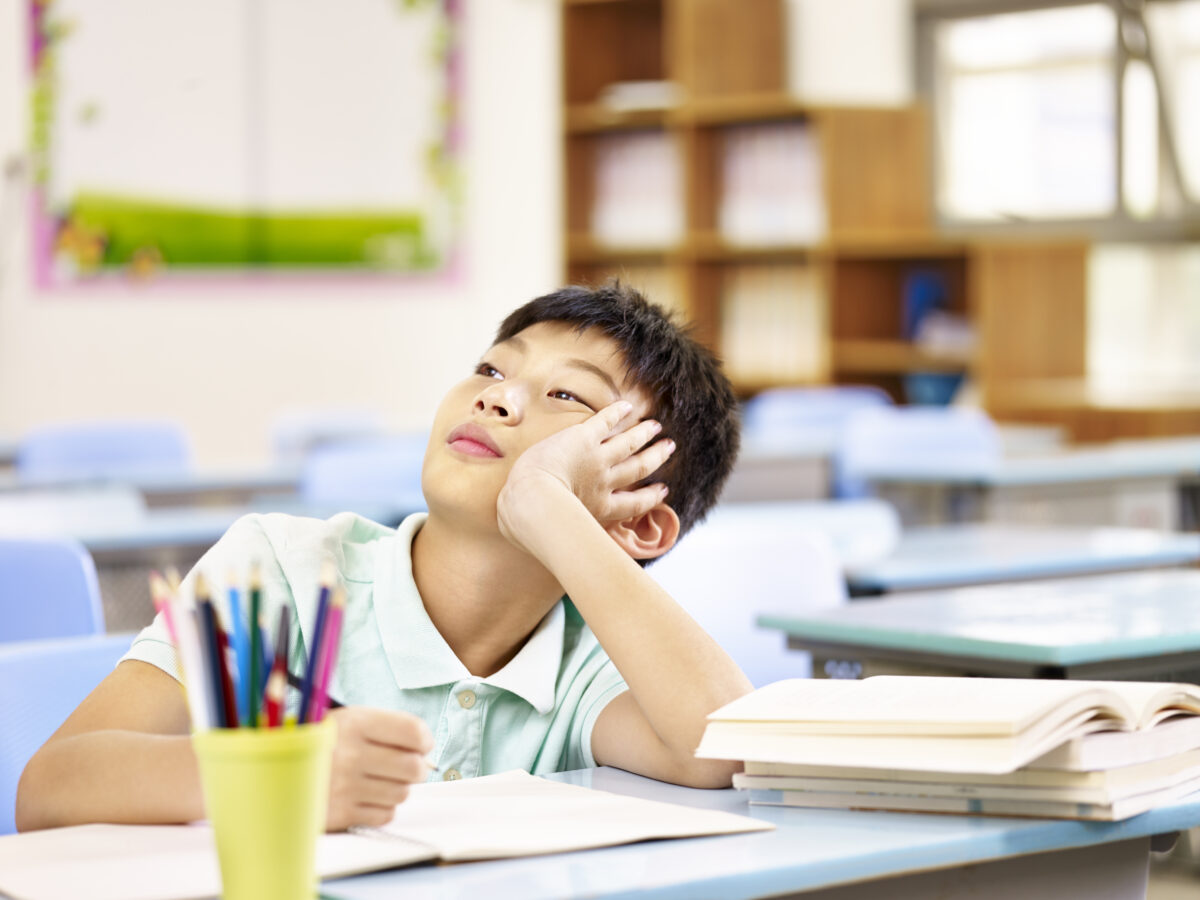
 Secondly, they have weak concentration. Children with insufficient concentration may be able to sit down, but they stare at you like a cloud, daydreaming, completely unaware of what they are doing. They hold a pencil and look at their homework, but they are just looking at it and can never absorb the first question. So they may be able to sit down, but they will always stay on the first question, constantly distracted by phone calls or doorbells, and they can never focus.

 Some parents have complained to us that if it is a hyperactive child, they will need to walk around in the first hour, and children with poor concentration will be daydreaming for the first hour, and it will take until the second hour before they can continue, and they will do it very slowly.

Thirdly, weak reading and writing ability. You may have heard of reading and writing disorders, which are more severe cases. However, some children do not have reading and writing disorders, but their reading and writing abilities are weak. This includes Chinese, English, and mathematics, including reading and writing. It seems difficult for them to read and spell, and they can never seem to remember simple words. Writing is always reversed; left and right are reversed, just like in a mirror, and some even turn things upside down.

 These types of children can sit still and will do so when asked. They can also concentrate well. But what happens? They will sit and do their homework, but they will sweat profusely while doing so. However, after completing their work, every question is wrong, and they cannot remember or understand anything. This may be due to reading and writing problems, which can slow down their homework.

I just mentioned three reasons, which one is it exactly? Of course, some children may have all three, but if parents can pay attention, they shouldn’t just blame the child. When he is working slowly, first pay attention to which of the three reasons the child belongs to. If you know which reason he belongs to, then we can prescribe the right treatment and get twice the result with half the effort.

Does the child cry non-stop when they are a little dissatisfied?

Source:Family Dynamic, Psychotherapist, Lai Shun Mei 

Sometimes, children may cry when they are slightly dissatisfied, and parents may have tried different methods to comfort their children, but the children still cry from time to time. This may make parents feel tired, helpless, and even annoyed. In fact, children’s crying is usually a way of expressing their emotions. Because their language is not yet developed enough to convey a complete story, their own feelings, and some thoughts, they will use the most direct or fastest way to seek help when they are unhappy, which is to cry, just like when they were infants.

Let’s not assume that just because children can walk, talk, and go to school, we need to talk to them more about reasoning. In fact, in the preschool years, parents should provide more emotional support to their children. Maslow, a well-known psychologist, came up with the five-level theory of human needs. The levels are physiological, safety, social, esteem, and self-actualization. As children’s cognitive development matures, they have already reached the third level of social needs, which is love and a sense of belonging.

 At this time, they need to feel the care and love from people around them, and they begin to recognize their own emotions. Therefore, if parents can help them express their emotions and thoughts, not only will their language skills improve, but their social needs will also be met.

When we see a child crying, we as parents can say something like this to them: “You seem very unhappy; maybe you don’t like it when mommy talks to you in a harsh tone.” “Your little brother took your toy without asking, which made you angry.” If you can speak accurately to the child’s feelings, they will quickly nod and stop crying. Over time, they will learn to use other means to express themselves instead of crying.

Some parents may wonder why their usually talkative kids can’t say what they’re feeling when they’re sad. This is because emotions can affect rational thinking. If I asked you to give a speech on stage right now, how would you feel? You may feel nervous or even a little scared, and if I don’t give you time to prepare, you may not be able to say a word. You can see that emotions can affect adults, let alone children.

So, as parents, we should first calm down and then carefully watch and try to figure out why our kids are crying. Then, put yourself in their shoes and express your thoughts and emotions. This way, the child will not cry anymore.

When there are differences in parenting, remember that “avoidance is not shameful and can be useful.”

Source:  Family Dynamic Psychotherapist, Yuen Wai Man

Parents’ upbringing backgrounds, education levels, or family of origin may differ in parent-child interaction, so it is quite normal for parents to have differing opinions on something.

When there are indeed different opinions, parents should find a calm environment to discuss their own perspectives and views on the problem. In any situation, we don’t want parents to argue directly in front of their children. For example, Dad can explain to Mom, “When I’m unhappy or under work pressure, I use my phone to vent and reduce stress, so I don’t think it’s a problem for kids to play with phones.”

And the wife can also express this to her husband: “Actually, I hope you can support me and understand that taking care of children is also very difficult for me.” Everyone can discuss calmly and equally in a peaceful environment. In fact, in the parenting environment, parents’ steps must be consistent.

Parents, for example, are like dancing partners in parenthood. When the father steps forward, the mother should step back. When the father raises his arms, the mother should spin around. This is a natural rhythm. If they can work together effectively, not only the dancing couple but also the onlookers can enjoy the dance. But if everyone insists on their own stance without compromise, the dance will be a mess.

In the family environment, children are often the most faithful and loyal audience, always standing in the center of the hall watching how their parents dance. So if the parents dance poorly, the audience will also be restless, the atmosphere will become tense, and more problems will arise. On the dance floor, parents will also trample on each other, causing more pain.

If there is a situation where the parents cannot see eye to eye and are in a heated argument, we would suggest that one of them leaves the scene. It’s not a matter of winning or losing or saving face, but rather allowing everyone to catch their breath and take a break. In a family environment, it’s not a competition between parents because the real victim will always be the child. So when parents are in a heated argument and cannot compromise, one of them should step back, cool down, and leave the scene. This would be better for everyone involved.

Does scare-based education work?

Source: Parenting Education Specialist, Ken Sir

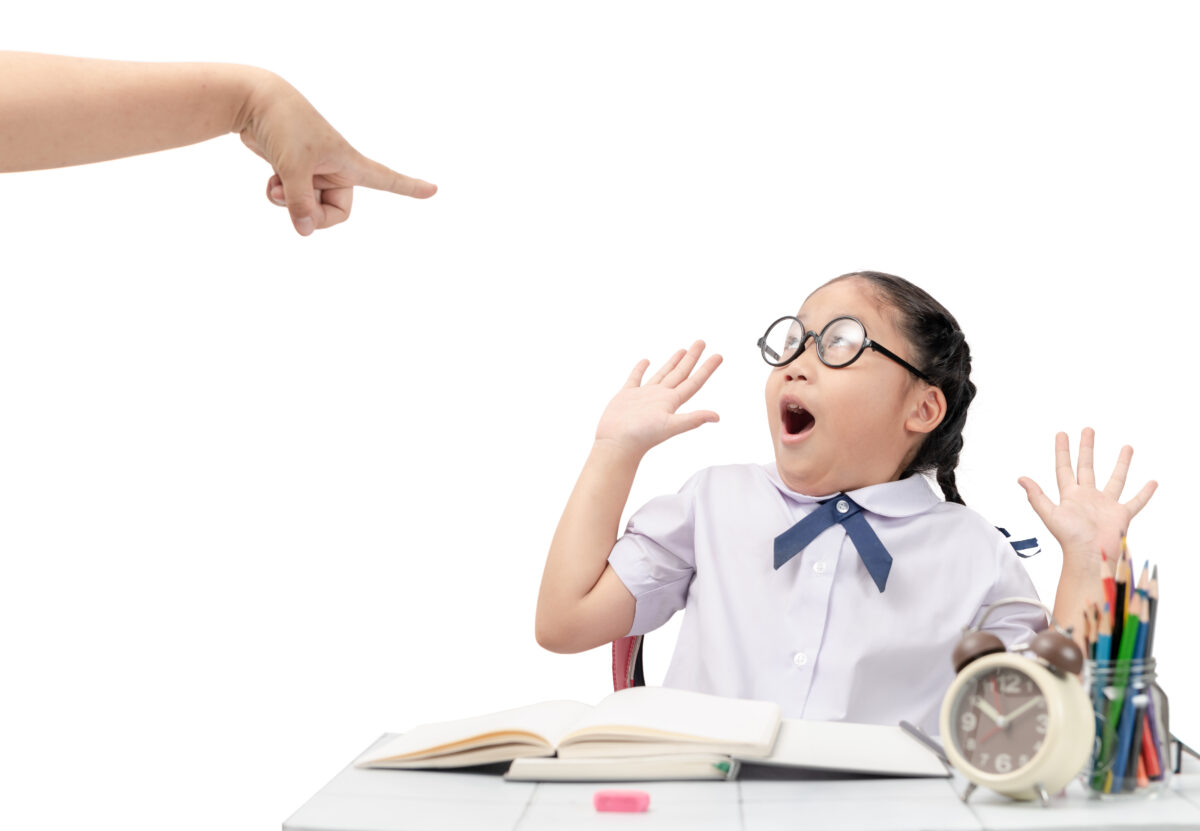
“If you don’t eat well, I won’t let you watch TV tonight.” In daily parenting, we often teach children in the form of threats, hoping that they will be obedient. But is this method effective? Will it backfire?

One time when I was taking a minibus, I saw a grandmother with two grandchildren getting on the minibus. As soon as they got on the bus, the two grandchildren immediately sat in the back seat, while the grandmother chose to sit in a single seat near the door. As soon as she sat down, she turned around and said to the two grandchildren, “I’m telling you to sit back next to me right now, or else I’ll leave you two here when we get off the bus.” As a result, one of the grandchildren shouted loudly from the back. What was he shouting? “You always say that; I don’t believe you.” This incident demonstrates that many parents are used to threatening their children during their childhood.

What are some examples of this? “If you don’t eat, I’ll turn off the TV,” or “If you don’t finish your homework quickly, there won’t be any ice cream for you tonight,” etc. In fact, these methods of parenting often make children treat things as unimportant. If parents frequently use these types of threats, their children will grow up and no longer take them seriously. Therefore, parents must remDoes scare-based education work?

ember that when we ask children to do something, it is best to directly tell them what we want them to do without adding too many elements of threats or coercion.