+852 2257 9331

+852 2257 9322

讓兒童在歡樂及無壓力中學習及成長

園訓:「教養孩童,使他走當行的道,就是到老他也不偏離。」箴言二十二章6節

Parents Zone

Being unfocused when playing with toys, will it make it harder for them to concentrate on learning in the future?

Source : Registered Clinical Psychologist, Yiu Fong Lee


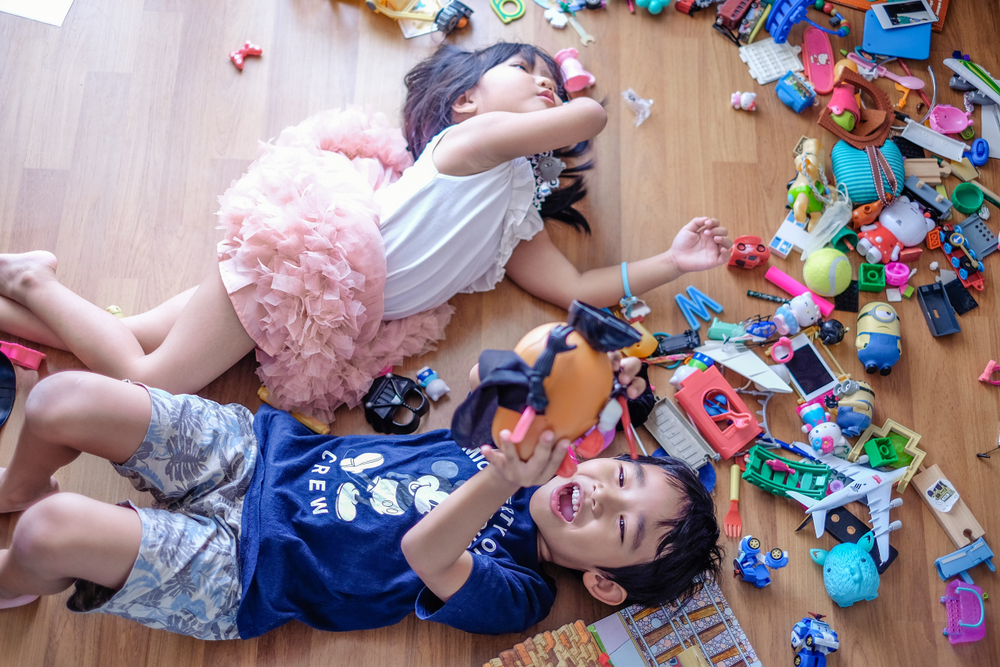
Some parents may notice that their children, aged 4 to 5, often have trouble staying focused when playing with toys. For example, they may play with one toy for only 2 minutes before switching to another, and they might take out all the toys in the room without cleaning up afterward. Parents may worry that if their children are so unfocused now, how will they fare in exams or when studying in the future?


It turns out that when children’s brain development is not yet mature, their attention span can be a bit short. Research has found that mindfulness can help improve children’s focus, especially by training their frontal lobes, which can enhance their attention and concentration.


There are some mindfulness games that can be used as a reference. For example, parents can use certain apps with visual cues. Children can follow these apps, for instance, there might be an image of a balloon that inflates when they breathe in and deflates when they breathe out. This way, by following their breath, children can improve their ability to concentrate. Additionally, there’s a practice called ‘Statue,’ which many parents might remember from their own childhood. In this exercise, children must sit still and watch an app or a timer for a specific duration to see how long they can remain seated calmly.


“Then, if children manage to do this, you can introduce an additional element, which is auditory distractions. For example, you can include some simple sounds, like calm music. If the children succeed with that, you can gradually introduce more challenging elements, such as cartoons or anything they enjoy, to see if they can stay focused on the app and their breathing in a more distracting environment. This helps train their concentration.


Secondly, we can try implementing some rules and visual reminders. You can tell the children that there is a rule when it comes to playing games or with toys: they have to finish playing with one thing before they start with another, and they should spend at least 5 to 10 minutes playing with each item before switching. You can use some pictures to show them one toy, then cleaning up that toy, and then moving on to the next. In between, you can indicate that they should play with each toy for 5 to 10 minutes.”


The third method is a behavioral consequence approach. When children are able to focus, parents can encourage them by saying, ‘You did a great job because you were so focused!’ or by telling them, ‘I appreciate your effort because you can sit still and enjoy one toy. You can actually have more fun while playing with your toys this way.’ If the child cannot do it, we can introduce consequences. For example, you can say, ‘You finished playing with one thing and then jumped to another and then to a third one. This means you couldn’t follow the rules, so now we need to take a break.’ This break could be, for instance, 5 minutes of not playing with any toys. You can use an app to help them sit quietly until they feel they can concentrate on one game, and then you can continue playing.


The fourth method is what we call the ‘Star Focus Reward Plan.’ For this, you can give the child a timer, clock, or hourglass, and the child watches the time while engaging in a focused activity, like 1 minute or 2 minutes. Parents can discuss with the child that for each session of focused attention, they will earn a star, which goes into a piggy bank. The child can see how long they can focus, and these stars accumulate, helping the child become more focused over time.
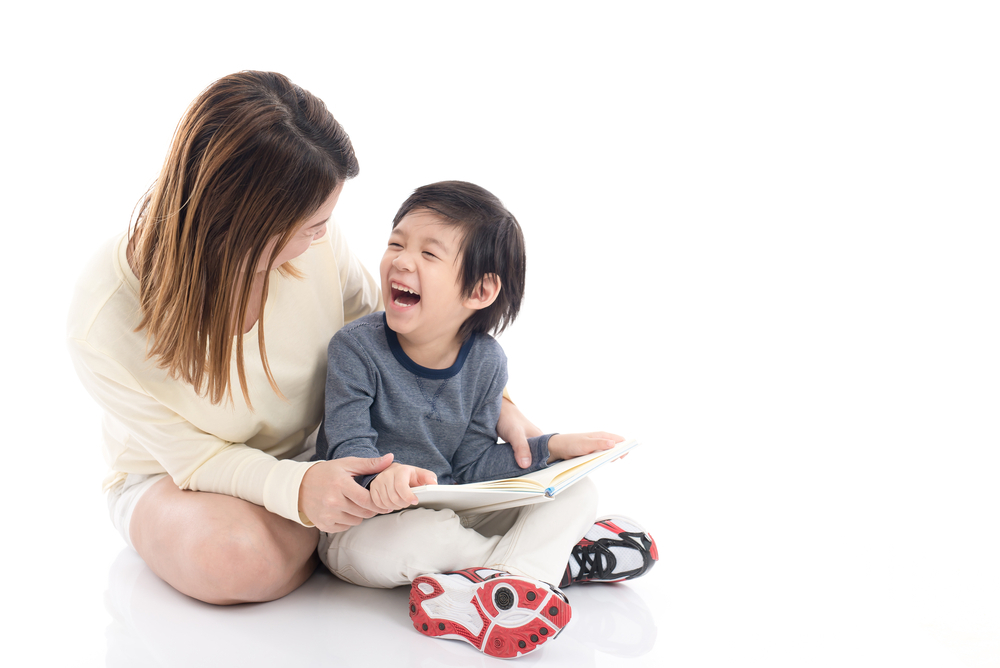

What is interactive reading? What are the techniques and steps for engaging in interactive reading with children?

Source: Educational psychologists, Shum Ka Man and Tang Wai Yan


Interactive reading is when parents and children engage in reading through conversation. The main difference between interactive reading and traditional reading aloud lies in the fact that traditional reading aloud often involves parents telling stories to children or, in some cases, parents’ intention to teach children to recognize words, focusing primarily on word recognition. However, the advantage of interactive reading is not just about word recognition; it aims to foster a positive parent-child relationship and help children express themselves through conversation.


In interactive reading, children take on an active role, where they can ask questions and guide the conversation through these questions and answers, thereby enhancing their reading comprehension skills. When parents engage in interactive reading with children, they should consider what questions to ask and what steps to follow. There are various ways for parents to ask questions, and we teach them a prompting framework that includes five different question types, abbreviated as ‘CROWD.’


C stands for Completion, where questions can be posed in a fill-in-the-blank manner. R represents Recall, encouraging children to remember what happened earlier in the story. O denotes Open-ended questions, allowing children to speculate about what might happen next. W represents Wh questions, covering the six Ws: who, what, when, where, why, and how. Finally, D stands for Distancing questions, which prompt children to relate the story to their own life experiences, asking how the story connects to their daily lives.


Interactive reading also follows a framework called ‘PEER.’

The first step is ‘Prompt,’ which refers to the types of questions asked. The second step is ‘Evaluate,’ where after asking questions, you can provide responses to the child. ‘Evaluate’ involves giving positive encouragement to the child, such as praising them when they answer correctly, saying, ‘You did a great job; you listened very attentively.’ If they answer incorrectly, it’s still important to encourage them, saying, ‘You tried very hard!’ and then attempt to find the answer together in the book.


Next is ‘Expand’ (E), which means expanding on what the child says. If a child’s response is brief, you can add adjectives or other details to make the sentence richer. Finally, there’s ‘Repeat’ (R), where after listening to the story, the child repeats the story, which can help improve their oral language skills.

Categories
Parents Zone Parents Zone Parents Zone Parents Zone Parents Zone Parents Zone Parents Zone Parents Zone Parents Zone Parents Zone

A quick method to calm down young children

Source: Pediatric Behavioral Therapist, Yip Wai Lun


Many times, as parents, when we see our children experiencing negative emotions like anger, tantrums, or extreme unhappiness, we often want to quickly resolve the situation by saying things like, “Don’t be so angry!” or we may scold them, sometimes even yelling, “Shut up right now!” or using a countdown like “One! Two! Three!” to command them. Some parents may try to reason with their children, saying, “We shouldn’t behave like this; we should stay calm.” However, these methods are not always very effective. Why is this the case?


It turns out that this is closely related to the structure of our brains. Understanding the brain’s structure can be very helpful in parenting. If we are familiar with two specific parts of the brain, it can aid us in disciplining our children. The first part is called the amygdala, which is a pair of almond-shaped clusters located in the posterior part of our brain. When we are startled or feel threatened, the amygdala sends signals that prepare us for either a fight or flight response. The amygdala operates on a reflexive level.


Another part is called the prefrontal cortex, which is responsible for our flexibility and empathy. However, the amygdala and the prefrontal cortex cannot function simultaneously. The development of a child’s prefrontal cortex takes place from around the age of two to over twenty years old before it fully matures. Only then can they understand your reasoning and consider your thoughts and feelings.


As a result, most of the time, children are primarily influenced by the two amygdalae. This is why you often see children experiencing various emotions, becoming easily agitated, and prone to tantrums.


How do we stop the amygdala from functioning? This is very important. The way we make the amygdala stop functioning is by helping children express their emotions, especially when they have negative emotions. As parents, we should help them speak out, for example, saying, “I can see that you’re very unhappy,” “I can see that you’re very disappointed,” or “You seem very sad.” Because when you express and describe their feelings, their prefrontal cortex will send soothing messages to their amygdala, causing the amygdala to stop functioning immediately.


Whatever you do, don’t react negatively! When you see that your child is emotional, express your own personal feelings as a parent: “I’m really angry!” “What you did is not right!” or “I feel upset!” Doing this will only stimulate the child’s amygdala and make them more resistant. So the first step in disciplining children is not to control or teach them, but to first connect with their emotions and then readjust.

Does a child having few friends indicate tendencies toward autism or social disorders?

Source : Education Expert, School Supervisor,Wu Shan-ying


Parents often worry about their children and ask, “Have you made any friends at school?” However, when the child responds with “I don’t have any friends” or consistently mentions the same friend, parents may begin to worry if their child has tendencies toward autism or social disorders.


In reality, some children have been this way since childhood. They may have a preference for playing with objects or toys rather than socializing with peers. Even in higher grades, they might immerse themselves in activities like building puzzles, engaging in quiet activities, or conducting experiments independently, showing a strong focus, but not necessarily an inclination to play with others. These children are introverted but not necessarily autistic. Just like adults, some adults may not be talkative, but they can be attentive and observant. They may not cast a wide social net, but they might have a few close and long-lasting friendships. These are aspects of personality.


The second scenario is that some children, even if they enjoy playing with others, tend to prefer interacting with older peers or even adults. They might like to hang out with teachers, engage in conversations with teachers, but not necessarily enjoy playing with their same-age peers. From a teacher’s or parent’s perspective, it can be easy to perceive this as a social problem. These situations often occur, especially among gifted or academically inclined children.


Typically, normal children begin to grasp the concept of friendship around the ages of 4 or 5, and this understanding gradually develops after the age of 3. Therefore, they also start to learn empathy and consideration for others around the ages of 4 or 5, which makes it easier for them to make friends. If parents notice that their child isn’t very sociable in the early years, there’s no need to be overly concerned. Many children become more capable of socializing as they progress to kindergarten levels like K2 and K3 or even in primary school.


However, it’s essential to be aware that some younger children who appear more mature might establish someone as their best friend right from Pre-Nursery (PN) or Kindergarten 1 (K1). This is a normal part of a child’s development. Often, as these children grow older and communicate more, they may form new friendships and share more with others.


Lastly, parents should be mindful of whether their child’s difficulty in making friends might be related to language skills. In my experience, I’ve observed that from the second half of PN to the first half of K1, children’s language skills begin to develop rapidly, leading to significant differences in their ability to express themselves. Children who are more talkative or proficient in speaking may naturally gravitate towards one another. Even in higher grades, you may find that children who enjoy speaking English tend to play together, while those who prefer speaking Chinese form their own groups. These dynamics can impact the social and emotional well-being of children with weaker language skills. Therefore, parents should pay attention to their child’s relationships with classmates and provide more care and support to their child as needed.


If parents genuinely find that their child has difficulty making friends, they can consider the following points. Firstly, it’s essential to understand the child’s natural personality. If a child is introverted, this is not a problem or a fault. What matters most is not to place too much pressure on yourself or the child. Otherwise, the child may begin to question their own personality and even doubt themselves. During a child’s early development, it’s crucial to provide an environment filled with love and encouragement. In such an environment, the child will notice the admiration of those around them, which will boost their self-confidence and make it easier for them to take the first step.


Secondly, many children might not dislike making friends, but they may have a preference for playing with older children. They feel that playing with older kids offers learning opportunities or a sense of challenge. Some boys may even enjoy the competition that comes with running faster than their peers. So, parents should pay attention to whether their child, due to being exceptionally intelligent, mature, or talented, tends to gravitate towards older peers or even adults.


Lastly, parents should consider the child’s language expression abilities. If there is a deficiency in language skills, it’s best to address those language skills first and then work on developing social skills. If language skills are not the issue, pushing the child too hard to make friends can actually harm their self-confidence. When you repeatedly ask the child why they don’t have friends while others do, the child may begin to question themselves and feel worse about the situation.

How to deal with young children who are unwilling to sleep on their own and wake up in the middle of the night looking for their parents?

Source : Registered Clinical Psychologist, Yiu Fong Lee


Many parents experience headaches when their children have trouble sleeping at night. This could be because the children either refuse to sleep or insist on having their parents with them while they sleep. Some children even wake up in the middle of the night and cry unless they find their parents. What methods can help children learn to sleep better or fall asleep on their own?


First, parents need to understand that a child’s poor sleep habits or refusal to sleep can create a vicious cycle of excessive dependence on parental comfort. In this cycle, children require things like being patted, held, or soothed by their parents in order to feel sleepy. Parental presence and soothing become prerequisites for their sleep, and without these conditions, children may wake up in the middle of the night and seek their parents.


Therefore, it’s important to help children learn self-soothing techniques or to teach them how to fall asleep independently. Research indicates that around three-month-old infants gradually begin to develop the ability to self-soothe. By about nine months of age, 50 to 80% of infants can sleep through the night. Parents should have confidence in their child’s ability to self-soothe and fall asleep on their own, and they can assist in this process.


However, what we need to help them develop is to establish a bedtime routine, including the bedroom environment. It’s best to have a completely dark room because darkness stimulates the production of melatonin, a substance in our brain that helps us feel sleepy and speeds up our sleep. Secondly, we should try to establish a specific bedtime ritual for the child, which could involve cuddling them to sleep, singing, giving a massage, or telling a story – but it should be just one designated activity. You can discuss with the child what this designated activity should be, something they would enjoy. Every night at that time, we perform this designated activity, then turn off the lights and go to sleep. This designated activity will signal to the child’s brain that it’s almost time to sleep.


Thirdly, it’s important to remember that blue light can have a significant impact on children. Blue light can disrupt the secretion of melatonin in our brains, which can affect sleep and lead to insomnia or poor sleep quality. Therefore, parents should ensure that there are absolutely no electronic devices in the bedroom, and children should not be allowed to use any electronic devices in the hour leading up to bedtime. This can help children sleep better.


The fourth method is controlled comforting. This method involves providing comfort to the child but gradually reducing the comforting time as they grow older. For example, you can engage in a conversation with the child, saying, “I’ll stay with you for 5 minutes, and then Mommy will leave. After 5 minutes, I’ll come back to check on you. If you can try to close your eyes and stay quiet here, Mommy will give you a kiss.” Then, slowly increase the time before leaving the room, maybe 5 minutes, 10 minutes, or 15 minutes, allowing the child to gradually learn to fall asleep on their own and develop self-soothing abilities.


What should we do if the child wakes up in the middle of the night and seeks their parents’ presence? The same principle applies here: stay with the child for a while and then encourage them to fall asleep independently. If possible, keep extending the time until they can fall asleep on their own.

How should I choose between morning and afternoon kindergarten classes?

Source : Registered Educational Psychologist, Pang Chi Wah


Even if approximately seven to eight out of ten parents prefer morning classes for their children, some may still opt for afternoon classes. When children wake up and leave for school together with their parents, they can take naps, which may lead to better learning. Generally, there are higher expectations for children attending morning classes, but what issues might they encounter?


However, young children, especially those in K1 or N1, may have longer sleep times. Therefore, they may experience emotional issues when getting up in the morning. In such cases, parents should choose afternoon classes for their children, even if they are reluctant. It’s not because you couldn’t secure a spot in the morning class but rather a deliberate choice.


The reason for this choice might be that both parents finish work very late, possibly returning home after 7 p.m., and then spend time with their child until midnight. Quality family time is precious. Do you value study time more or family time more? Sleeping until 11 a.m. the next day is not much different from taking an afternoon nap, as it amounts to a full 10 hours of sleep from midnight to 10 a.m. In other words, even without an afternoon nap, there is enough sleep quality and sufficient family time.


If you’ve applied for morning classes and your child is unwilling to wake up early, they will need to gradually adapt. This adaptation can begin with waking up at 10 a.m. and gradually moving to 9:30 a.m., 9 a.m., and 8:30 a.m. There are also several techniques for waking them up. For instance, there was a case where instead of waking up their head, they woke up the body. This involved massaging the feet, waking up the feet, waking up the abdomen, waking up the back, and then waking up the hands and feet. In addition, providing ample light by pulling back the curtains, turning on the TV, and introducing the smell of breakfast can help. If there’s a favorite food aroma, it’s even easier to get the child out of bed when it smells delicious.


Parents should be prepared on both fronts. On one hand, they shouldn’t automatically assume that morning classes are the only good option. On the other hand, if for certain reasons, they choose morning classes, they should add more gradual steps to the waking-up process and provide multi-sensory stimulation to help the child wake up through their willpower. This is because the concern is that if their willpower wakes up but their body isn’t synchronized, it can be very challenging.

Being a parent can be stressful; it’s important to manage anxiety promptly

Source: Psychiatrist Dr. Wong Chun Yin


As parents, we have to juggle work and family responsibilities. Under significant stress, it’s easy to experience anxiety. Anxiety is a natural, built-in response, and it can protect us when our lives are threatened. However, excessive worry can lead to physical discomforts like a racing heart, stomachaches, muscle tension, rapid breathing, headaches, trembling hands, sweating, or frequent urination. If not addressed in a timely manner, it can lead to more serious emotional issues and can also affect family relationships.


Here are three ways to reduce anxiety symptoms. First is practicing relaxation through deep breathing, using diaphragmatic breathing. Inhale slowly through your nose for a count of 4, letting your abdomen rise for 2 seconds, then exhale slowly through your mouth for a count of 4. Pause for 2 seconds and repeat this process 5 to 10 times.


The second method is muscle relaxation exercises. Find a comfortable place to sit or lie down, gently close your eyes, and relax all your muscles. Start by shifting your focus to your feet, tense the muscles in your feet for 10 seconds, and then release. Proceed sequentially, tensing and relaxing the muscles in your legs, arms, neck, and facial muscles.


Lastly, there is imagery relaxation practice. In a quiet place, close your eyes and imagine a comfortable setting, visualizing what you see, hear, smell, and feel for 5 to 10 minutes. Gradually return to the present reality.


Additionally, it’s important to cultivate a positive thinking pattern in your daily life. Try to see the bright side of things at all times rather than dwelling on unhappy thoughts constantly, which can reduce the chances of developing mood disorders.

Everyday life is full of eye use. Adults and children do eye exercises together.

Source : Chinese Medicine Practitioner, Chiu Shi Cheung


Many children today spend a lot of time looking at computers, phones, or reading, which can strain their eyes. There are some acupoint massages that can help children relieve eye strain.


The first acupoint we’ll introduce is the “Zan Chuk” point. It’s located at the very front end of the eyebrows, about half an inch downward, at the corner of the eye socket. Another acupoint is called the “Jing Ming” point. It’s located at the side of the nasal bridge, right in the middle between the two eyes, near the inner edge of each eye. The third point is the “Si Pak” point, which is about 1 inch below the eyes, roughly the width of two fingers apart. It’s in front of the cheekbone, and when you touch it, there should be a slight depression just below the eyes; this is the “Si Pak” point. The last acupoint is the “Shi Chuk Hung” point, located at the very end of the eyebrow. All four of these points can help with dispersing wind, clearing heat, and improving vision.


Once we know the locations of these acupoints, how do we massage the eye area?


First, let’s start with the first point, the “Zan Chuk” point. You’ll use your four fingers to hold down the eyebrows, and then use your thumb to press on the “Zan Chuk” point. The “Zan Chuk” point is right at the very front end of the eyebrows, in the depression at the corner of the eye socket. Hold it with your four fingers and your thumb, and gently rotate 64 times in opposite directions.


The second acupoint is called “Jing Ming” Point, located in the area in front of the inner corner of the eye, between the eyebrow and the bridge of the nose. We use two fingers to gently pinch the bridge of the nose and then slowly massage it up and down, repeating this motion 64 times.


The third acupoint is called “Si Pak” Point. It is located on the inner edge of the cheekbone on our face. In fact, when you touch it, you’ll feel a slight depression. Using two fingers, place them on either side of the bridge of the nose, and you will be able to locate this point. Gently press inside, and you will feel a slight soreness. After locating it, you can also rotate the pressure 64 times.


The fourth acupoint is Shi Chuk Hung Point. To locate it, use your thumbs to first press on both sides of the temples. Then, starting from the Shi Chuk Hung Point, sweep upward to the Shi Chuk Hung Point again, and then continue downward, below the eyes, to the Shi Chuk Hung Point. This constitutes one cycle, and repeat this motion 64 times.


By massaging these four acupoints, you can not only relieve eye fatigue but also improve the blood circulation around the eyes and prevent eye conditions such as nearsightedness. When we do eye exercises, remember to keep our eyes closed throughout the entire process. After completing the eye exercises, it’s also important to keep your eyes closed for 2 to 5 minutes. We typically press each acupoint for 64 times. Why 64 times? It’s because, from the perspective of Traditional Chinese Medicine “eighty-eight sixty-four“, we call it the “first of eight eights” meaning the most important.

Happy kindergarten, how about elementary school?

Written by: Octopus parent, Mr. Leung Wing Lok.

I’ve heard many parents share their experiences, and within the three years of kindergarten, the biggest concern is the transition to elementary school. How much should be done for the child? Should interview classes be arranged? Should extra English lessons or etiquette coaching (not a typo, there are actually training classes for etiquette) be arranged? Among the myriad of skills, is having sixteen talents out of eighteen enough? Or should the child learn niche skills to stand out, like magic tricks or acrobatics? Both parents and children are busy enjoying quality bonding time, especially when every activity has a purpose. As a result, attitudes change, and the child might lose interest in extracurricular classes.

Parents worry about selecting the preferred elementary school and creating resumes.

Especially for K3 students entering the “peak school application season” in June, parents and children face the decision of whether to apply to 10 or 8 elementary schools. As a father, you may hope to only apply to one or two preferred elementary schools, but can you bear the responsibility of “not providing enough education” for your child?

Another challenge is undoubtedly creating the resume, how elaborate should it be? Many schools explicitly state that they accept a maximum of only 4 pages, but you see other parents’ “work reports” for their children that are as thick as prospectuses, with an exquisite level of presentation rivaling Apple’s brochures. You glance at your child, he might not stand out particularly, nor is he an incredibly handsome “lad.” Do you have the courage to limit the resume to just 4 pages?

The choice between “entering elementary school” and “becoming a person.”

What’s most precious isn’t how outstanding the “academic performance” is, but rather the ability to interact with others, to be polite. Of course, what I’m most grateful for is when the teacher specifically instructed my son to “love Daddy, Daddy works hard,” transforming me in my child’s eyes from a “rarely seen person” to a “cherished person to meet.” These teachings might not necessarily aid in entering elementary school, but they hold everlasting value in the parent-child relationship.

Reflecting back, did kindergarten primarily cultivate your child for “entering elementary school,” or for “becoming a person”? Facing the same question, as a parent, is your goal of educating your child solely for the purpose of “entering elementary school”?

Winning an argument but losing the relationship – How to harmoniously handle disputes?

Written by: Registered social workers, Chan Kam Hing and Mak Wai Hung

Have you ever experienced arguing with your family over trivial matters? When family members hold different opinions or perspectives, conflicts can easily arise, especially when it comes to decisions related to personal preferences, habits, values, and expectations. These conflicts can range from simple things like arguing over using the bathroom, choosing different TV shows to watch, or deciding how to celebrate a grandparent’s birthday, or deciding which tutoring center a child should attend. In reality, disagreements among family members are quite common, and occasional disputes can be a part of family life. However, continuous and ongoing arguments can lead to stress, damage relationships among family members, and even lead to family breakdown. You can try to ease conflicts through positive communication methods and consider the following approaches:

  1. When you’re very angry or unable to discuss things calmly, try to calm your emotions first. You can designate a calming space in your home in advance, where you can cool down, or find a spot near the door to compose yourself.
  2. After your emotions have settled a bit, consider whether it’s necessary or worth continuing to argue about the issue. Also, try to identify the root of the problem.
  3. Remind yourself that the ultimate goal is to resolve the issue and conflict, rather than trying to win over the other person. In a family, there’s no real glory in winning or losing against each other.
  1. Make an effort to actively listen to the other person’s perspective and avoid interrupting their speech. You can respond concisely to what you’ve heard or the message the other person is trying to convey at an appropriate time, showing that you’ve understood their point.
  1. Then, you can express your stance sincerely, clearly, and reasonably. If there’s an opportunity or a need, you can discuss the areas of disagreement and find suitable solutions for both parties.
  1. Avoid bringing up unrelated matters.

In fact, empathy is essential when living together as a family in such close quarters. Everyone hopes to receive respect, care, and mutual affection. Don’t underestimate the importance of family harmony. It can bring you mental contentment, stable emotions, sufficient energy to handle work, and gradually lead your life towards happiness and fulfillment.