+852 2257 9331

+852 2257 9322

讓兒童在歡樂及無壓力中學習及成長

園訓:「教養孩童,使他走當行的道,就是到老他也不偏離。」箴言二十二章6節

Parents Zone

For a cowardly child

Written by: Mr. Leung Wing Lok, the Octopus Parent


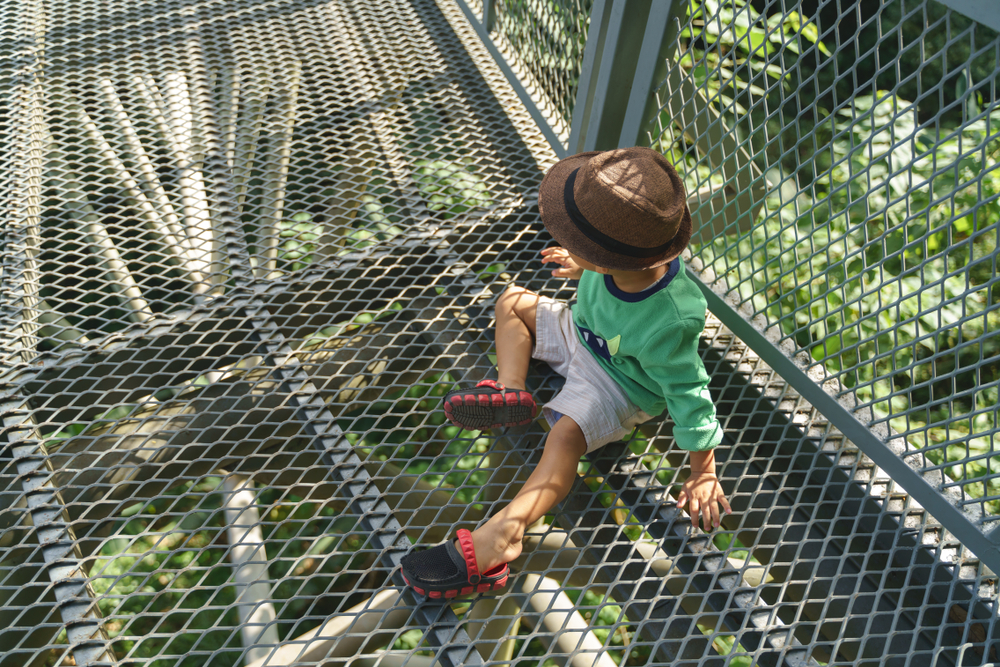
Earlier during the summer vacation, I let my child participate in various extracurricular activities. My eldest son, Hei Gor, and his kindergarten classmates took part in an outdoor activity venue located in Tai Po called “Tree House,” which has grasslands, farmlands, fish ponds, and more, allowing them to get close to nature. The highlight of the activity was climbing up to the 5-meter-high treehouse. Hei Gor, known for his timidity, would get weak in the knees and sweaty hands even when standing by the glass railings in shopping malls. Standing at a height of 5 meters, he said, “Oh… I thought there would be stairs to go down from the treehouse…”


Hei Gor was afraid to descend from the treehouse and was ‘mocked’ by the coach

Under the guidance of the coach, parents helped their children put on climbing safety gear, ready to climb up to the treehouse. As the parents climbed following the coach’s instructions, the children felt reassured seeing their parents demonstrate and followed suit. After Hei Gor climbed up to the treehouse with step-by-step guidance from the coach, he began to regret it, not knowing how to get back to the ground. Having to hug the metal pole and ‘play firefighter’ to slide down (although he was suspended by a safety rope) was a huge challenge for him. No matter how I coaxed and instructed him, and regardless of how the parents and classmates on the ground cheered him on, Hei Gor just braced his feet against the tree trunk and refused to approach the metal pole.


The coach let the other children land first, one by one. Some were playing with smiles on their faces, some were crying out of fear, but all landed safely. Only Hei Gor was resolute in his refusal. The loving coach kept coaxing Hei Gor in his unique way, saying, “You are 100% emotional, be a little rational, and don’t be scared.” Hei Gor said, “No!” The coach suggested, “How about the parents below… (I thought he said: applaud to encourage him) How about raising money together to buy a refrigerator and air conditioner for Hei Gor to spend the night in the tree house.” After hearing this, Hei Gor cried out even louder, “I don’t want to spend the night here.” I thought to myself, “Education is a sacred and solemn task. If you don’t know how to teach, you’re in big trouble.”


Overcoming Fear, Parents Feel Relieved


The coach continued to Hei Gor, “You see, your aunt is heavier than you, and she landed safely. It’s okay.” Hei Gor laughed through his tears, “Dad is the fattest and heaviest!” At that moment, I wanted to jump down from the tree house. Despite several attempts, the coach talked about politics, Wong Tze Wah, the property market, and songs by Danny Chan, to which Hei Gor said, “I don’t know what brother is talking about.” When all the children had gone up and down once, and some had started their second round, Hei Gor and I were still enduring the high temperature for over half an hour, “watching”. In the end, I lied that his brother would slide down with him, and let him buckle the safety belt, Hei Gor held the iron pole and slowly descended. The process and landing naturally involved continuous crying, and the first thing he did when he landed was to hug his mother.


Hei Gor took a rest and suddenly said to me, “I was really scared.” I took him back under the tree and said, “You climbed up to the tree house all by yourself just now, which is very high, and you did a great job. Although it took some time to come down, you have succeeded no matter what, and there’s no need to be afraid anymore. Would you like to climb it again next time?” Hei Gor replied, “Yes, I want to!”


Hei Gor, you are timid, but your courage to overcome your fear of heights certainly makes your parents relieved. However, it is your overcoming of fear and expressing the hope to climb up again next time that makes me proud. (Although you might cry and make a fuss again next time).

Highly intelligent autistic children.  Smart use of storybooks

Written by: Educational Psychologist Team of the Heep Hong Society


Highly intelligent children with autism, i.e., those with intellectual and verbal abilities, are 5 to 6 years old. What kinds of books can parents let their children read? What are some tips for parents to read to their children?


Highly intelligent autistic children should be able to understand simple moral stories. Parents can refer to “social stories” to help their autistic children understand the content effectively. Once the child is familiar with the story, parents can change the main characters to other real people or to the child himself/herself, so that the child can gradually put himself/herself into the moral story. If the characters can be changed, then the storyline can also be changed a little bit: for example, “Grandma’s house” can be changed to “Auntie’s house”, so that the child can utilize what he/she has learned flexibly. Of course, it is important to change the characters and plots before children develop a stubbornness towards the details of the story. As for fables, fairy tales, and myths, which often use abstract metaphors, they can only be used when the autistic child can generalize his/her knowledge.


On the cognitive side, when the child has reached a certain level of comprehension, parents can emphasize emotional words in the story, e.g. “When she saw the dog, Mei Mei was scared. When it is appropriate for children to learn the concept of sequence, parents can emphasize the description of time, e.g., “Mei-mei did something wrong, and afterward, she said she was sorry. Depending on the level of the child, parents can make good use of each page of the storybook by adding or emphasizing appropriate words in the tone of voice.


In the aspect of parent-child communication, higher-ability children with autism can take turns with their parents to tell stories, which not only trains the child’s ability to follow the story and listen attentively but also deepens the child’s impression of the story. Flexible use of storybooks by parents can meet the developmental needs of children and promote parent-child communication. Children with autism often lack imagination. Storybooks with accompanying dolls can be very useful: Initially, the story is told, then the dolls are added, and gradually the use of the storybook is reduced until only the dolls are used to tell the story, using a “you say a sentence, I say a sentence” method, leading the child out of the storybook and into the world of imaginative play.


In terms of social cognitive development, parents who use comics can use correction fluid to paint over the “speech bubbles” of the characters, and then create new dialogues with their children. Initially, they can start by altering certain words, and as both parties become familiar with the method, they can alter more parts until all the dialogues are original. Parents who are willing to try can also create storybooks tailored to their children and design different storytelling methods to attract the social concepts needed for their children’s learning.

Can children be naughty?


Written by: Fung Ji Hei, Game Therapist


When Ji Fung, a first-grader, didn’t return from the restroom after a while, the teacher sent the male class leader to check on him. After a while, the class leader came back panting, saying, “The entire restroom is soaked!” So, the teacher went to investigate personally. Upon arriving at the restroom, the teacher saw a flood, with water and bubbles everywhere, and Ji Fung was “washing his hands” in one of the sinks. The teacher asked, “What are you doing?” He replied, “Washing my hands and seeing why there are bubbles.” To prevent any danger, the teacher stopped Ji Fung’s actions.


Ji Fung is a very curious child, but his curiosity often causes inconvenience for others and himself. He likes to question everything and even more, he likes to try everything. Once, in order to see if he could fit through the hole in the back of a chair, he got his head stuck in it for about an hour. It was only after a worker used tools to break the chair that he was able to free himself. Despite his numerous terrifying experiences, nothing has deterred him yet. The teachers are at a loss because Ji Fung is not a bad student. Punishment alone is futile, so they need to think of other solutions.


“Naughty”: A Multi-faceted View


Describing Ji Fung as “naughty” is perhaps the most fitting, and this trait is quite common among children, albeit to varying degrees. What is “naughtiness”? We often associate it with words like “mischievous” or “playful,” which mostly carry a negative connotation. However, from a positive perspective, naughtiness can have many benefits. First, it’s not hard to see that naughty children love to play; they are motivated to play at all times, and these motivations often stem from their curiosity. They satisfy their curious thoughts through different methods, sometimes disregarding consequences and limitations to personally try and explore solutions to puzzles. Secondly, most “naughty” children are somewhat clever and know how to play better than others, so they use various ways to express their creativity, coming up with ingenious methods to play. In summary, “naughtiness” can be seen as a mix of curiosity and creativity, only becoming problematic when it is not properly controlled and leads to trouble.

What can you do if you have a “naughty” child around?


  1. Relax


Naughty children can easily make their caregivers nervous because they often do unexpected things, sometimes even causing embarrassment. We need to understand that naughtiness is one of the children’s natural traits, and they are in the process of learning. We need to patiently keep pace with their growth, avoiding suppressing their development for the sake of our own pride.


  1. Set Boundaries


Naughty children often cross boundaries due to a lack of understanding of them. We can set rules with them and implement them effectively. This not only ensures the children’s safety but also establishes their understanding of limits.


  1. Satisfy Curiosity


To address the issue at its root, we need to satisfy their curiosity. The method is to teach them how to think and find answers. For example, parents can teach them to find answers through reading or take them to nature to train their observational skills, which can help them face future challenges.

Autism is no longer a secret

Written by: The Educational Psychologist Team of the Heep Hong Society


For parents, explaining their child’s autism to others can feel like reopening a wound. They fear not only the lack of support from friends and family, but also the potential for misunderstanding or discrimination. So, how should parents approach this with their relatives and friends?


Understanding the causes of autism is crucial. When explaining to friends and family, parents must first clarify that the cause of autism is not related to parental neglect or overindulgence. Autism is associated with abnormal brain development, which affects the child’s communication skills, thinking and behavior patterns, as well as their ability to understand the thoughts and actions of others. Parents can list the common characteristics of most children with autism, including social difficulties, stubbornness, anxiety, communication difficulties, focus ability, varying levels of activity, atypical emotional responses, physical coordination problems, and different sensory responses.


Stay Updated with the Latest Information


In addition, parents can try to stay updated with the latest information on autism, such as concepts like “executive function”, “central integration”, and “theory of mind”. This can help them better understand their child’s developmental needs. When relatives and friends show interest in learning more, parents can explain these concepts in depth. The more parents understand about autism, the easier it is for relatives and friends to get to know the child. Perhaps the usual discriminatory views will gradually disappear as they understand more. The knowledge parents equip themselves with can make relatives and friends feel the parents’ positivity and capability.


Describe the Child’s Performance with Specific Adjectives


Furthermore, when parents describe their child, they should use specific and positive adjectives. For example, describe the child as having strong memory (instead of “good at forgetting”), weak focus (instead of “distracted”), unable to understand others’ demands (instead of “disobedient, dragging”), repeating the same actions (instead of “he/she must…”), or nodding to the beat (instead of “likes music”) and other abstract adjectives. Let relatives and friends understand that, like other children, their child is an innocent little friend.


How to discover hidden talents and potential?


Written by: geneDecode Genetics Education Professional Team


Innate potential is an ability that everyone is born with, a genetic characteristic that is present before growth. From birth, each child possesses their own unique talents. In the process of a child’s growth, emotional intelligence, IQ, and the ability to withstand setbacks, among others, are all necessary conditions for success. Among these conditions, each child’s talents are different. Can we discover their innate talents in the innocent eyes of children? Can we be sure to capture these talents and guide the children on a path of growth that suits them?


Here is a mother’s experience:


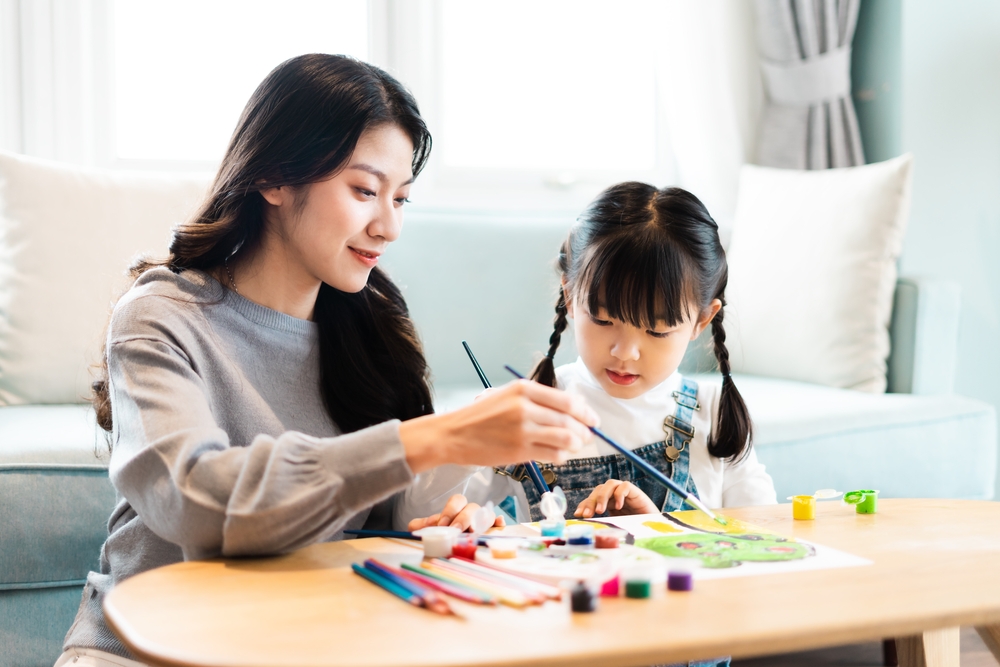
‘Amy is 4 years old this year. As she grows up, she is becoming more and more curious about the things around her. Amy’s father noticed that she seemed to show a special interest in doodling when she was 2 years old. I casually gave her some paint, and she could use a brush, crayons, or her fingers, even a bottle of ketchup, to paint. No one knows what she is painting, maybe only she knows. Amy’s father and I both think that she should be allowed to grow freely. I found that she seems to like painting very much. If she is really good at it, I think we will definitely cultivate her well.’


Amy’s parents are wise. Each child has different talents hidden in different fields. When a child’s talent is found, if it can be cultivated and paid attention to by parents and teachers, it will save a lot of detours in the direction of success. However, the most important thing is for children to have a sense of success from a young age and grow up to be happy and confident people.


Scientific research confirms that the period of infant growth is the fastest and most sensitive period of brain development, and it is also the best time to develop a child’s talents. The cultivation of talents is time-sensitive, and scientists call this irreplaceable stage the ‘talent time window


Only at the most important and appropriate moments, with the right education and cultivation, can innate potential develop into real abilities. Missing these key moments of development, a child’s talents may relatively weaken, and their innate potential may no longer stand out. Here are some key moments for reference:


Key Moments for Talent Development


Memory: 12 months to 12 years old

Emotional Intelligence: 2 months to 22 years old

IQ: Birth to 13 years old

Music: 2 months to 5 years old

Drawing: Birth to 15 years old

Sports: Birth to 12 years old


‘Whether Amy can become a painter when she grows up, I can’t confirm, we are just observing. It can be said that it is completely based on feeling. Talent is hard to say, maybe she has talents in other areas, or sometimes it is not obvious, then it is hard for us to discover. We can only do our best and observe her from as many angles as possible.’


This is not just a worry for Amy’s mother. Every parent dreams of their child’s success, but the key is how to accurately discover a child’s talents.


Many parents are trying, hoping to find clues in their child’s behavior, hoping to find ways to discover a child’s talents early. Those parents who seem to have found a method, according to their own judgment and willingness, send their children to various specialty classes and youth classes to learn various skills, hoping that one day, they can become experts in this field. For this goal, parents spare no effort to invest a lot of money and time.


However, doing so seems to not only waste a lot of money and time, but also those originally intelligent children are more likely to lose their spirit in the multitude of educational directions, their talents are delayed or even obliterated. They passively move from one tutoring class to another specialty class, learning things they neither like nor are good at.


Childhood, for children, is no longer a memory of happiness and beauty, but of pressure and worry. The saddest thing is that when they grow up, they have more complaints about their parents.


Is there a better way to understand a child’s talents, personality, and traits, so as to teach students in accordance with their aptitude and cultivate them in a directed way?

How to reduce the side effects of rewards?

Written by: Pang Chi Wah, Registered Educational Psychologist at the New Horizons Development Centre


Some parents have the following thoughts about rewards: “The original intention was to praise the child’s good performance, but now the reward seems to have become a bribe.” “He has become utilitarian, calculating the degree of his effort based on the size of the reward.” “Sometimes I even feel that the child has become greedy. The rewards that once attracted him no longer have the original effect. Only by providing richer rewards is he willing to make an effort.”


In fact, in the commercial society where adults are located, bosses also use rewards and bonuses to praise employees’ outstanding work performance and inspire employee morale. Many early childhood education experts have also proposed a reward system, using children’s favorite food, toys, etc., to train and cultivate their good behavior habits. Rewards have become our usual way, but parents’ worries are not unfounded. How can we reduce the side effects of rewards?


There are mainly two directions to reduce the side effects of rewards. One is that parents can change the type of rewards, and at the same time, they must not encourage children with money, otherwise it will make children prioritize money and everything will be based on materialism. The rewards given by parents can be changed from one-time enjoyment such as food, gradually transformed into long-term gifts, such as entertaining toys, academic stationery, etc., and later can be rewarded spiritually, such as parents giving certificates, applause and other non-material encouragement.


The second approach is that parents can gradually reduce the proportion of rewards given according to the following three criteria:


  1. Increase the number of expected behaviors completed by the child before giving a reward.

Example: If parents expect the child to put the toys away in the toy box after playing, initially, parents may need to give stickers as encouragement for the child to be willing to tidy up the toys; afterwards, the child should put the toys in the toy box several times on their own before the parents give sticker rewards.


  1. Raise the standard of requirements according to the child’s performance, and only give rewards after the child completes behaviors of higher difficulty.

Example: Initially, as long as the child puts all the toys in the box, they can be given sticker encouragement. Then the requirements can be raised, the child needs to put all the toys in the box, and carefully organize the toys and place them properly to get the sticker.

  1. When the child is relaxed and happy or makes a request, parents can make demands on the child without providing rewards.

Example: The child requests to watch their favorite TV show, the parent proposes that the child needs to tidy up the toys into the toy box before they can watch TV.


Through these two principles, parents can systematically dilute the function of external material rewards, let children internalize the motivation behind completing good behaviors, gradually reduce dependence on external encouragement, and make them gain a sense of success from within as the main source of their learning motivation.

Categories
Parents Zone Parents Zone Parents Zone Parents Zone Parents Zone Parents Zone Parents Zone Parents Zone Parents Zone Parents Zone

Parent-child creative art creation

Written by: Director of Pario Arts, Lee Sou Jing 


Everyone has creativity and artistic potential. If properly nurtured, it can enhance one’s moral sentiments and make life more perfect. In the artistic atmosphere, diverse activities inspire individuals’ creativity, aesthetic sense, and diverse abilities, promoting holistic development. ‘Love’ is the driving force of creation. In a free, democratic, safe, and harmonious environment and atmosphere, it is the expression of ‘love,’ emphasizing mutual tolerance, acceptance of different opinions, and respect for and acceptance of others. So, how can parent-child creative art creation express ‘love’? Here, the author shares his views with all parents.


The significance of parent-child creative art creation:

  • Art education starts with individuals. Parents try to engage in artistic creation to cultivate their children’s artistic accomplishments.
  • The first lesson of art education begins with ‘listening’ and ‘acceptance.’ Parents learn to accept the diverse ways in which children express their creativity.
  • Through the joint participation and experience of parent-child art creation, parents can get closer to and understand their children’s hearts.
  • Parent-child art creation helps children to understand themselves and release emotions and stress.
  • By integrating an atmosphere of mutual appreciation and respect, it reduces parental stress and anxiety, thereby enhancing parent-child relationships.
  • Making parent-child fall in love with creation, integrating art into life, and enhancing the quality of life.


Artistic Cultivation Tips


  • Cultivate a kind of knowledge in being human and enhance the ability to share, that is, ’empathy.’
  • According to the research of psychologist Hoffman on the development of human empathy, ’empathy’ is the ability to understand the feelings of others and to put oneself in their shoes.
  • The three steps of ’empathy’: (1) Imagine standing in the other person’s position (2) Identify the other person’s true feelings (3) Convey understanding and feelings to the other person.
  • Empathy’ is an important ability in interpersonal relationships. Only those with ’empathy’ can establish good interpersonal relationships, self-discipline, and a sense of responsibility.
  • Children at the age of 2 to 3 can already understand the feelings of others. In order for children to be compassionate, possess ’empathy,’ and understand love and care for others, it is very important for parents to lead by example.

Smart learning depends on exercise

Written by: Ms. Fung Chi Hei, Game Therapist, Lok Sin Tong Leung Kau Kui Primary School


I previously participated in a professional exchange activity for teachers in Taiwan and was impressed by the emphasis on using exercise to cultivate children’s growth in the Taiwanese education system. This experience provided new inspiration, which I hope to share with parents. One of the schools visited during the exchange can be described as the elementary school version of a sports academy. Upon entering the school, the students welcomed the visitors with a government-promoted fitness routine. They performed various warm-up exercises in unison, exuding a lively spirit akin to tiger cubs, making me feel like they had truly entered a forest full of tiger cubs.


Exercise Strengthens Children’s Learning Abilities


Principal Liu of the Tiger Forest Elementary School stated that the school is a key focus school designated by the government, with a special emphasis on students’ physical development. The school believes that exercise can strengthen students’ learning abilities. They have adopted the “Anytime Exercise” program based on the research of John J. Ratey, MD, a clinical assistant professor of psychiatry at Harvard Medical School. This program advocates for students to be engaged in exercise at all times, hence the name “Anytime.” During breaks, students would run to any part of the playground to exercise, some playing dodgeball, some climbing the monkey bars, and others playing badminton. All students enjoy every moment of exercise.


The Benefits of Exercise: Strengthening Brain Function


It is well known that exercise has the effect of strengthening the body, and in Ratey’s research, he pointed out more about the benefits of exercise on the brain. He described the brain as the center for processing information, transmitting messages through different pathways using various transmitters (chemicals). During exercise, the brain can effectively produce more transmitters and strengthen pathways, allowing messages to be transmitted faster and more accurately.


Applying this theory to learning, students can enhance their brain function through exercise, thereby improving their learning effectiveness. Research has confirmed that exercise can improve students’ concentration and memory, both of which are essential for successful learning. Furthermore, exercise can stimulate the brain to produce dopamine (a chemical that brings happiness), enabling students to learn joyfully, which naturally leads to better academic performance.


How to Make Children Love Exercise?


For children to enjoy the time and benefits of exercise, parents must help them develop a love for exercise. Here are three suggestions:


  1. Anytime Exercise

Provide children with more opportunities for exercise, suitable time, tools, and space, while ensuring the safety of the environment.


  1. Healthy Exercise

Teach children to exercise for the sake of their health and emphasize the benefits of exercise on health.


  1. Exercising Together

Exercise with children more often, enjoy the moments of exercise and savor the wonderful time with family.

Taking medicine: Bitterness before eating

Written by: Doctor Cheung Kit


If a child is seriously ill, I think the parents’ suffering is also significant. This is because, in addition to taking the child to see a doctor and taking time off to care for the child, they also worry about giving the child medication. Therefore, the real battle often begins after returning home from the doctor. There is a systematic approach to administering medication to children, and parents can learn how to do it.


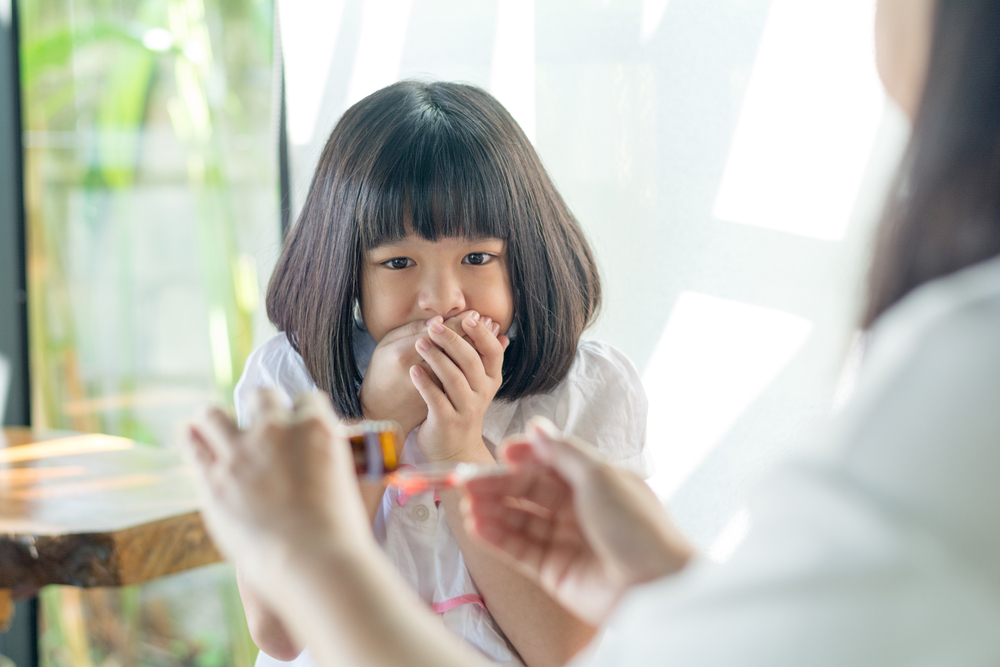
First, the initial form of medication that children encounter is liquid. Liquid medication can be divided into two types: solution and suspension. The former is a watery preparation, often containing a small amount of alcohol, while the latter does not contain alcohol but has granular suspended particles, which can be felt in the throat. Both types are equally effective and have their supporters. Doctors generally have both types of medication available.


Due to the medicinal taste, children do not like it. If you plan to add the medicine to a flavored drink to mask the taste, it generally fails because children are very likely to notice. Furthermore, children have a natural aversion to nausea, so when they feel the discomfort of the medicine in their throat, they may vomit it out. There is no distinction between taking children’s medicine on an empty stomach or after a meal. However, some medicines may react with food, for example, tetracycline and erythromycin in antibiotics may interact with milk, affecting their effectiveness.


As for pills or capsule medication, it’s better to wait until the child is a little older to try them. In theory, both are equally effective compared to liquid medicine. However, generally, cough syrups contain a variety of functional ingredients, making them more effective. Therefore, adults also consider prescription cough syrups. As for the age at which prescription pills can be taken, it depends on the child’s acceptance, as some adults may not even swallow pills. So, as parents, how can we make the process of administering medication less of a chore?


  • Try not to force the child to swallow the medicine.
  • Involve the child in the process of taking the medicine as early as possible, such as getting the medicine, pouring the liquid, and eventually self-administering with a spoon.
  • If the child vomits heavily within half an hour of taking the medicine, you can administer another dose.
  • It’s best not to mix the medicine with milk, as if the child doesn’t finish the milk, they won’t get the full dose of the medicine.
  • Encourage the child to try swallowing pills (no age limit), starting with a small one.
  • Suppositories are indeed effective for certain oral medications. However, for many sensible children, this is a “painful” experience and can lead to negative associations, so it’s best to avoid it if possible.
  • Parents should also have a positive attitude towards taking medicine: getting sick requires taking medicine, and taking medicine is not a chore.


We hope that all parents will not be troubled by their children taking medicine.

What should I do if my child has a habit of sucking their fingers?

Written by: Early Childhood Education Specialist, Teacher Chan-Chen Shu-an


According to Dr. David Levy’s research, children who finish a bottle of milk within 10 minutes (possibly because the bottle’s nipple hole is larger) are more likely to exhibit finger-sucking behavior than those who finish the entire bottle in 20 minutes. Dr. Levy also conducted an experiment feeding puppies with a dropper, preventing them from sucking while feeding. The result was that they resorted to sucking their own or other puppies’ skin, some so vigorously that the skin peeled off. From this, we can understand that the behavior of infants sucking their fingers in the first few months is due to the lack of satisfaction from sucking, it is a need, not innate, and not a bad behavior.


Breastfeeding Fosters Parent-Child Bond


When a mother can breastfeed her baby, the baby is the happiest. This is because the baby not only receives proper nutrition and warmth and security from being in contact with the mother’s skin but also enjoys the soft nipple while sucking, which provides not only sustenance but also a profound love and emotional connection between mother and child. This deep love and family bond cannot be compared to feeding from a cold bottle, especially considering the supreme satisfaction the baby gets from sucking.


However, most mothers work outside the home due to various reasons, and sometimes have to feed their children with a bottle. In such cases, special attention should be paid to the frequency and duration of feeding. Mothers should calmly allow their children to eat slowly, paying particular attention to the size of the bottle nipple hole. Only when the child is satisfied with sucking will they be less likely to develop the habit of finger-sucking. When an infant starts to enjoy sucking their fingers, it is an unconscious behavior. Their little finger moves around and unintentionally goes into their mouth, bringing them pleasure and satisfaction, leading to sucking.


Releasing Psychological Tension


However, if a child continues to suck their fingers at the age of 4 or 5, it takes on a different meaning. This may be a way of releasing psychological tension. For example, due to parental conflict, the child feels anxious; or because of a new sibling, they fear losing their parents’ love; or because the parents are too busy to care for them, they feel lonely and lack the warmth of a family; or because the child is sent to kindergarten too early and lacks a sense of security due to inadequate care. These factors can lead to anxiety, unease, tension, and fear in children, all of which are causes of psychological tension.


Like adults, children need to release psychological tension when they are anxious. This is a natural phenomenon. Adults often smoke to relax and relieve psychological tension. Children may suck their fingers or rock back and forth to release emotional tension. In this situation, parents should not only improve their attitude towards their children but also be extra patient. They should maintain a calm and gentle attitude to help the child relax and feel no pressure. On the contrary, if parents show worry, and nervousness, or are eager to correct and blame, or if they tie the child’s fingers or apply bitter medicine, it will only backfire, increase the child’s unease, and create a vicious cycle. This will prolong the habit of finger-sucking, as the child wants to quit but cannot control themselves.


Preventive and Corrective Methods


  1. Whenever possible, breastfeed, as it is the most natural and suitable feeding method for infants, and it reduces the chance of developing a finger-sucking habit.
  2. When using a bottle, parents should pay special attention to the feeding time, aiming for 15 to 20 minutes, which is ideal.
  3. Engage the child in activities with toys and dolls to redirect the finger-sucking habit.
  4. Spend more time with the child, playing, telling stories, and singing songs together to prevent the child from feeling lonely or bored, which can lead to finger-sucking.
  5. When a child sucks their fingers vigorously, parents should remain patient and calm. Sometimes, ignoring the behavior can lead to its natural disappearance.
  6. If a child has had a finger-sucking habit for several years before the age of 6, it will naturally diminish over time, especially if the child only sucks their fingers when sleeping. Parents should patiently wait, as hasty correction is ineffective. Particularly after starting kindergarten, the habit may disappear naturally due to the child’s reluctance to suck their fingers in front of peers or being occupied with other activities at school.
  7. Fingers sucked on will have an unpleasant odor. If a 5 to 6-year-old child still has this habit, letting them smell the unpleasant odor may help correct the behavior.