+852 2257 9331

+852 2257 9322

讓兒童在歡樂及無壓力中學習及成長

園訓:「教養孩童,使他走當行的道,就是到老他也不偏離。」箴言二十二章6節

Parents Zone

Happiness is actually simple – enjoy quality time with children

Written by: Marriage and Family Therapist, Child Play Therapist, Lee Wai Chee

Everyone hopes to find happiness, and parents are certainly no exception. Many times, parents are even willing to sacrifice their own immediate needs and happiness, hoping to exchange them for their children’s “happy life” in the future.

Most parents understand that their children’s future “happiness” is by no means guaranteed one hundred percent. However, many parents believe that not striving today will inevitably lead to failure tomorrow. In addition, the social atmosphere advocates “doing more is better than doing less,” and even considers not doing anything as laziness and passivity. As a result, all parents and children find themselves doing more and more, gradually losing their direction.

In online discussion forums, I often see some parents criticizing society and the education system for putting excessive pressure on children, stifling their growth space. However, on the other hand, they helplessly push their children to do various exercises every day, showing their helplessness and sense of powerlessness. The contradictions and dilemmas faced by parents are understandable, but these fears and anxieties can cause parents to easily miss the insights that children give us.

When a baby is born, they live a simple, direct, and natural life every day. When they are hungry, they eat; when they are full, they sleep; and when they wake up, they play. They explore the world in their own way and interact with the people around them. They laugh heartily when they are happy and cry out loudly when they are sad. Children tell us that human needs are actually quite simple, and as long as these needs are satisfied, they will be happy. It’s just that the adult world has become increasingly complex, and people’s desires have grown, causing adults to forget even their own needs and, as a result, become increasingly unhappy. Ironically, we still assume that we understand the “key” to a “happy life” and teach children how to find happiness.

Today’s society is filled with the anxiety and unease of adults who fear being marginalized by society and worry that their stable lives are threatened. As parents, they are even more concerned about their children’s future lives. In fact, children understand the essence of happiness best because they naturally live freely and at ease. However, somewhere along the way, parents hope that their children can adapt to the distorted rules of the real world as soon as possible, inadvertently erasing their natural and childlike qualities.

A child’s growth takes time. If parents can observe their lives with a calm mind, be patient, slow down, and enjoy every moment spent with their children, they may rediscover that happiness is not in the future but in the present moment.


A good son is not hard to find, but a good mother is difficult to come by

Written: New Horizons Development Centre, Registered Educational Psychologist, Pang Chi Wah

I once overheard a conversation between two mothers, and I wonder if the readers can relate to it. One of them said, “You’re so lucky! You have a well-behaved baby, but I wasn’t that fortunate…” Some mothers may believe that a child’s behavior is largely determined by their innate qualities. However, the truth is that postnatal nurturing is equally crucial, and a mother’s ability to grasp effective discipline techniques and maintain a stable emotional state can have a significant impact on their child.

When a mother wants to criticize or teach her child, she must first ask herself if she truly understands the underlying reasons behind the issue. Is there any room for improvement on her part, or can she find alternative ways to address the problem, rather than attributing everything to “good luck” or “bad luck”? There’s a saying, “When there is a master, there will be exceptional talents.” Many parents hope their children will achieve great success, but in reality, helping an ordinary child to thrive is not difficult, especially in today’s society, which advocates diversified development. Children have more opportunities to showcase their talents. While the past society revered “prestigious” professions like doctors and lawyers, as society transforms, people also appreciate excellence in design, arts, and other fields. Most importantly, as a mother, whether you seize the chance to carefully discover your child’s strengths is crucial.

However, good children also need good parents to nurture them. Although today is an era of gender equality, mothers still play a crucial role in the parent-child relationship. If a mother wishes to effectively educate her child, she must invest more time in participating in relevant parenting courses, listening to different experts’ opinions, such as educational psychologists, social workers, or other educators, to learn how to analyze the child’s situation and provide the most appropriate educational methods and assistance. Additionally, parents can join some parent support groups, or take the opportunity to stay in touch with other parents, exchange ideas and observations, share experiences and methods of educating children, which will be of great help to mothers in how to teach their children.

Therefore, if you want your children to succeed, as a mother, you must lead by example, strive to do what you should do, and actively learn disciplinary skills for children. Please remember: children come not to “take revenge” on you but to “repay kindness” to you. In the process of learning to discipline children, a mother can learn even more than what she teaches her child. While imparting knowledge and learning to educate children, she herself also benefits in knowledge. Moreover, the challenges encountered in the process are a test of patience and inner qualities for the mother, contributing to life experiences and understanding of life.

The title at the beginning of the article was “Good children are not born that way,” so in conclusion, I summarize with one sentence: “Good mothers are not born that way either.”

Long bathing time, eczema will become problematic and requires a long time to heal

Written by:YEUNG Ming Ha, Registered Chinese Medicine Practitioner

Recently, a parent uploaded pictures of their daughter suffering from eczema on a social media platform. Looking at the little girl’s red and swollen hands and feet, and her skin all irritated, indeed, it’s heartbreaking. As a result, parents all over the city are now sharing their secret remedies to deal with eczema because many of them or their children are also affected by eczema, and they often suffer during seasonal changes.


Eczema is a common allergic dermatitis and is not contagious. In Traditional Chinese Medicine (TCM), eczema is referred to as “wet sores” and is a prevalent skin condition in Hong Kong. The internal factors contributing to eczema include the individual’s constitution, emotional state, and dysfunction of the body’s organs, while external factors involve wind, dampness, and heat obstructing the skin. When a person has a weaker constitution and a lower immune system, wind, dampness, and heat pathogenic factors may invade the skin, resulting in eczema or exacerbating existing eczema issues. Eczema can occur on any part of the body, such as the ears, head, face, hands, navel, and lower legs, but it usually appears symmetrically. Patients often feel intense itching, and scratching can lead to skin abrasions, oozing of pus, and even infection. The condition tends to recur, making the skin rough and the scabs raised. To deal with eczema, it’s essential to start by addressing these three small habits:

Shorten bathing time.

When eczema flares up, patients often can’t resist scratching. Hands are the most susceptible to bacterial contact and harbor the most microorganisms. Therefore, it’s important to avoid the habit of frequently touching the face to prevent exacerbating skin inflammation. Additionally, patients should refrain from using products with high alcohol content frequently, as the chemical components can irritate and weaken the skin’s natural barrier. Furthermore, due to the itching sensation on their skin, patients tend to wash their hands and take long baths, mistakenly thinking it can relieve itching and provide a sense of cleanliness. However, excessive cleaning can actually damage the skin’s sebum layer and stratum corneum, compromising the skin’s natural protective barrier and worsening eczema problems. Therefore, it is recommended for patients to shorten their bathing time, ideally not exceeding 3 minutes. At the same time, they should choose hypoallergenic skincare and bathing products to minimize irritation to the skin. For severe cases of eczema, it is suggested to only cleanse the armpits, lower body, and areas prone to sweating.

Here, I am introducing an anti-allergic formula: The ingredients include Fang Feng (防風) 6 qian, Ku Shen (苦參) 6 qian, and Sheng Gan Cao (生甘草) 3 qian. Boil them with strong fire for 30 minutes, then use it to rinse the sensitive areas. It has excellent moisturizing and itch-relief effects.

Good lifestyle and hygiene habits.

Patients’ living environment needs regular cleaning, and they should frequently change bedsheets and close-fitting clothes. Moreover, patients should wear loose and cotton clothes, avoid wearing tight clothes made of wool, and ensure no chemical residues like detergents remain on their clothes. Regarding daily routines, patients should go to bed and wake up early, avoid staying up late, maintain a balanced diet, exercise adequately to boost their immune system, and reduce the chances of triggering eczema. After exercising, they should immediately wipe away sweat and change into dry clothes to keep the skin clean and dry. Of course, the most crucial aspect is maintaining a positive mindset to reduce stress.


Dietary Restrictions Effectively Prevent Eczema

The onset of eczema is closely related to certain food sensitivities, so dietary restrictions are essential in the treatment of skin sensitivity. During the treatment of skin diseases, patients should avoid consuming “triggering foods.” “Triggering foods” are those that can induce rashes and worsen the condition in skin disease patients. These triggering foods mainly include seafood, beef, sweets, spicy foods, and alcoholic beverages. Skin diseases are often caused by the accumulation of “dampness” and “heat,” leading to the formation of “toxins.” Patients with skin conditions usually have a constitution characterized by congenital weakness of the spleen and stomach. When they consume excessive amounts of spicy foods, shrimp, crab, seafood, and other highly stimulating foods, or when they consume a large amount of raw and cold food during the summer, it can lead to the accumulation of damp toxins in the body. This can easily cause abnormalities in spleen and stomach functions, increasing the likelihood of developing eczema.

Setting boundaries is better than trying to prevent children from making mistakes

Written by: Peggy Ho Pui Yee, Founder and Volunteer Executive Director of Good Love Passion

Being overly critical is the most common mistake parents make in disciplining their children. The phrase “love deeply, scold severely” reflects the emotions of most parents. Parents often fear that their children will develop any undesirable behavior during their growth, which may have lifelong consequences. Therefore, when disciplining their children, parents often resort to meticulous criticism as a way to remind them. In reality, making mistakes is an essential part of a child’s growth process. As children constantly change and grow, parents need to adapt to their developmental needs and adjust their approach to dealing with their behavior, even changing the way they interact with them.

For example, when a child fails to complete their homework on time, parents should calmly handle this common occurrence, as it is an opportunity for the child to improve and grow. Similarly, when a child talks back, it may indicate their emerging independence and critical thinking skills. It doesn’t necessarily mean they lack respect for their parents. As children grow older, they develop their own thoughts, opinions, and perspectives on various aspects of life. They also desire parental acknowledgment. As parents, we may not agree with these behaviors, but even in disagreement, we can understand the underlying needs of our children. This allows us to communicate more effectively with them and utilize appropriate disciplinary methods.

“While knowledge can change destiny, attitude determines everything!” Explosive anger and harsh accusations from parents are ineffective in discipline and serve no purpose. When parents understand how to gently and firmly assist their children and incorporate respect into daily life, children will develop a better understanding of rules and boundaries. Consequently, they will exercise more self-control and establish their own standards for behavior. With these standards in place, they will naturally become more independent, responsible individuals. Therefore, parents should establish boundaries in their children’s daily lives during their early childhood stages.

Since the age of one and a half, my daughter understood that writing is done on paper. Therefore, even at the age of 3, she has never stuck a sticker on the pristine walls of our home. She knows her boundaries and understands that a responsible child should keep the house clean. It is her responsibility. Parents establish guidelines for children to follow before discussing whether they are obedient or not.

When setting boundaries for younger children, it is important to be clear and specific. For example, you can say to a toddler, “If you can’t do it, it means you’re not behaving.” However, for young children, the term “not behaving” is vague and difficult for them to grasp. In addition, when setting boundaries, it is necessary to establish the consequences of not complying. It is important to emphasize that these consequences are “results” and not “punishments.” Consequences are simply the natural outcome of an agreement between both parties, operating under natural laws, and they are distinct from punishments. For example, after playing, if a child is expected to clean up their toys, they can continue playing next time only if they tidy up. However, if they don’t clean up, according to the previous agreement, their toys will be confiscated for two or three days.

At this point, parents must make it clear to the child that this is the natural consequence of not fulfilling the agreement, not a punishment. Another example is when parents discuss with their child the time limit for watching TV or using electronic devices and set specific time boundaries. Similarly, if the child exceeds the designated time and doesn’t turn off the device, according to the previous agreement, they won’t be allowed to watch or use it for the next three days. When setting boundaries, parents need to ensure they are reasonable. Otherwise, it would be unfair to the child, making them more likely to cross the boundaries and become disobedient in the future.

While parents have the responsibility to teach children proper behavior, if the methods used are too impatient and harsh, lacking an understanding of the child’s growth process, it may lead to negative effects. Therefore, we should provide children with experiences of taking initiative to change for the better, engage in serious discussions, rather than resorting to severe punishments. Approaching the situation with a calm and composed demeanor can assist children in transforming their mistakes into opportunities for growth. Just like how children inevitably fall while learning to walk, we encourage them to pick themselves up and take another step forward.

When faced with a child’s misconduct, it is important to consider how to handle the situation in a way that fosters their ability to change. People generally do not intentionally make mistakes; the reason for making mistakes is often due to a lack of awareness. Making mistakes is not inherently frightening for children; what is truly concerning is making mistakes without understanding where they went wrong or how to correct them. If parents can approach their child’s mistakes with the right mindset and guide them towards making corrections using appropriate methods, these mistakes can become opportunities for reflection and progress. It also enhances the chance for communication between parents and children. Let us transform our children’s mistakes into beautiful errors.

Teaching children to stay away from violence

Written by : Dr. Hui Long Kit

In today’s society with advanced information and fast-paced information dissemination, children inevitably come into contact with various healthy and unhealthy information from a young age. For example, social networks are filled with verbal violence, and computer and mobile games are filled with bloody fights and war violence, which may lead to imitative behavior in the next generation.

From a biological perspective, violence is an inherent instinct of living beings; otherwise, survival would be impossible in the law of the jungle. Newborn babies are closest to their instincts, but the cultivation of rationality is a matter of upbringing and the responsibility of parents.

Parents should try to guide their children to reflect on the harm of violence:

1. Violence cannot solve people’s problems; it can only solve the problems of those who are problematic.

2. We live in a world full of challenges. Since rationality cannot solve all problems, violence certainly cannot.

3. Rationality sows the seeds of civilization, while violence spreads the poison of hatred in society.

4. “An eye for an eye, a tooth for a tooth”? When will the cycle of revenge end?

5. When others have different opinions from you, can you try to think: What common ground do we share? What can we share together?

6. There are no two identical individuals in the world. If violence is used to eliminate others just because they are different from you, the demise of humanity is not far away.

7. Schools teach Chinese history and Western history, and the history of humanity is a history of violence. Regarding the last global war – World War II, it was a self-inflicted massacre of the entire human race, resulting in the annihilation of a population equivalent to ten times that of Hong Kong. What problems did it actually solve?

8. Excluding individual regional conflicts, today’s era of peace and the stable, prosperous, and harmonious state of society are by no means inevitable.

9. Only with social stability and world peace can humanity have the space to pursue knowledge, advance technology, develop the economy, and improve social and cultural life. Only by distancing ourselves from violence can humanity have a future.

Boys and girls are very different. How do you properly raise children?

Source: LAM Woon-sum, former principal

Boys and girls are very different, but we have to be careful not to stereotype them because everyone is unique. But if you ask me about the school opening for both boys and girls in the first year of elementary school alone, there are far more girls crying.

It is true that boys and girls grow up with different characters. Of course, principals and teachers in co-educational schools should be aware of this characteristic and not treat them in the same way. This is why I sometimes say that this is important when choosing a school because most schools are co-educational and rarely design a curriculum for gender differences between boys and girls, and unfortunately, the curriculum is more favorable to girls.

Their concentration is much better than that of boys, so generally speaking, teachers feel that teaching in girls’ schools is like teaching in heaven when they attend classes. I dare not say the other one is hell, but the challenge is great. Boys’ energy is unlimited; the first thing to do is to release their energy. I always advise parents, “If you have a son, please have more involvement from the father.” It’s really hard for mothers to accompany their children to play soccer and then go cycling every day.

As I always say, mother has never been a boy, so she naturally doesn’t understand why he would be like this. His butt just doesn’t stick to the chair, and his feet are like a motor. He likes challenges and upgrading, and his mother should follow his personality and nurture him. So, if you see what the boy’s temperament is like this, you may design things for him to do and encourage him from there.

Girls like talking and chirping around. They have a lot of secrets. In their own and their classmates’ groups, there are many sub-groups. In fact, a girl’s interests may be very diverse; we have to see what kind of books she likes to read, accompany her to the library and talk to her, and choose books together. Don’t force her to read a certain type of book just because she’s a girl; nurture her according to her interests.

I guess that’s why children are telling me everything openly. Sometimes, when children want to tell their mothers something, adults may not be empathetic enough to respond to them. Because when we become adults, we forget that we were once children. We forget how helpless children are when they encounter certain problems. In fact, when the child came home, he wanted to jump on his mother and tell her his grievances. But mother is more concerned if there is a dictation tomorrow.

Over time, children will feel that it is not effective to talk, so I might write a letter to someone who listens to me and does not criticize. When dealing with these especially those connected with something on a girl’s mind, don’t be so quick to criticize rationally. You should try to understand her, just as if she wanted to cry, you should give her a vessel to hold her tears or, if she needed a shoulder, you should let her lean on you. This is a common occurrence for females. If you could do this part, she would be willing to tell you what’s on her mind.

Parents should let their children feel that their home is very safe, respectful, and loving. Second, parents should pay more attention to their children and follow their interests. Girls are easier to deal with because they have better attention spans, so if you provide those things, they will be self-motivated, while boys need more pushing.

When your son grows up to be as tall as you are and your daughter grows up to be as tall as you are, do you want him or her to still hold your hand? To date you? And then say to you, “Mommy, I have something on my mind to tell you.” Do you want that? If you want this, however, it will not happen naturally, you should put a lot of effort into it during your children’s growth, just like putting money in a piggy bank.

How to use music to learn a language?

Source: Speech Therapist, Miss Carley

In order to help children learn a language, parents use various methods. Have you ever considered singing as one of the methods? Music is an international language and is highly engaging for children. We also have many different ways to use music to assist children in language learning.

One simple method is called “lyric filling.” This method can be used for children who may not yet be able to speak or can only say a few words. Parents can try using this method. Choose a familiar song that the child knows, such as “Twinkle Twinkle Little Star.” However, instead of singing the entire song, use a single syllable to sing the entire song, for example, “ma ma ma ma ma ma ma ma ma ma ma ma ma.” Then suddenly stop and wait for the child to hum or sing the remaining syllable. Parents can encourage the child to vocalize that particular syllable.

The second method is to sing action songs with children, which involve movements. For example, the well-known song “If You’re happy and you know it, clap your hands.” You can sing this song with the child while performing different actions. Through this, children can learn different movements and some nouns and vocabulary.

Interestingly, music can enhance children’s memory. Have you ever noticed that there are many songs we heard when we were young or many years ago, and even if we haven’t sung them in years, we can still remember the lyrics? Therefore, we can simply sing the ABC Song with children to teach them basic English letters. We can also learn numbers with children, for example, “One Little, Two Little, Three Little Indians.”

If we want to teach children the English names of the days of the week, we can sing “Monday, Tuesday, Wednesday, Thursday, Friday, Saturday, and Sunday” with them. By incorporating vocabulary into music, it makes it easier for children to remember the words.

The fourth method is to try singing out certain phrases, similar to singing. We can also use props to assist, such as simple flashcards. For example, if we want to say, “Chan Siu Ming is eating an apple,” we can sing it out using a musical approach, which enhances the child’s motivation and interest in communication.

Categories
Parents Zone Parents Zone Parents Zone Parents Zone Parents Zone Parents Zone Parents Zone Parents Zone Parents Zone Parents Zone

How can parents deal with a more self-centered child?

Source: Registered Clinical Psychologist, Yiu Fong Lee

Many parents find that their children can be quite self-centered. When playing games or interacting with a group, they always want others to follow their rules. For example, a 5-year-old girl insists on playing with building blocks while her friend wants to play with cars. In such a situation, what should parents do? If the child becomes unhappy and self-centered, she may throw a tantrum and refuse to play with others. People may perceive this child as stubborn or temperamental. Here are a few methods that parents can consider to deal with their self-centered child.

First, it’s important to acknowledge the child’s emotions. Parents can approach the child and say, “Yes, I understand that you are feeling angry and unhappy right now because you really want to play with building blocks, but the other children don’t want to. Does it make you feel upset that you can’t play with the building blocks?” At this moment, parents can try patting or hugging the child, providing a sense of affirmation and closeness, allowing the child’s emotions to gradually calm down. When the child appears calmer, it’s an opportunity to help her move on to the next step.

The second step is called perspective-taking or putting oneself in others’ shoes. Encourage the child to imagine how the other person feels by entering their world or role. Parents can engage in role-playing with the child. For example, if the girl was A and the other child was B, the girl can now pretend to be B, and the parent can pretend to be A. The parent can imitate her tone and say, “I don’t want to play! I don’t like playing with cars! I must play with building blocks!” Then, the parent can ask the child, “How does that make you feel?” The child usually responds with, “He always insists on playing his way, and I don’t want to play with him. I feel unhappy.”

Parents can also ask the child, “If that’s the case, do you still want to play with this child and spend time together in the future?” The girl might respond, “I don’t really want to. If that’s the case, I’ll have to play alone by myself, and it’s boring.” Children usually want someone to play with.

Moving on to the third step, learning problem-solving. Parents can brainstorm ideas with the child, such as trying a game of rock-paper-scissors with the other child. It could be agreed that this time the winner gets to decide, and next time it could be the loser’s turn. Alternatively, we can switch and combine different ideas creatively. For example, in the case of playing with building blocks, can we play with both the building blocks and the cars? We can build a parking lot with the blocks and then let the cars drive on them. This way, we can play together.


We help the child come up with different types of solutions, but the most important thing is for them to understand how their behavior affects and impacts others, and how they can change their behavior so that others would be more willing to play with them. This is known as prosocial behavior.

Three years old determines eighty? What influences personality?

Written by: Registered educational psychologist, Pang Chi Wah

When I arrived at a friend’s birthday party, I saw a group of children milling around, having a good time. In another corner of the living room, several children were engrossed in reading their beloved extracurricular books, completely absorbed in their activity. The distinction between active and quiet children became immediately apparent. Are these traits of being active or quiet innate qualities encoded in our genetic makeup, or are they shaped by the nurturing and parenting methods of our upbringing?

Stepping into the nursery room at the hospital, one can witness a variety of behaviors among the infants. Despite their different physical appearances, each baby possesses their own distinctive qualities. Some babies are incredibly active, constantly moving their hands and feet as if riding a bicycle. On the other hand, there are babies who resemble sleeping princesses or princes, spending most of their days in deep slumber, appearing content. These individual characteristics also manifest during feeding time. Some babies are more proactive, eagerly consuming their food, causing concern that they might accidentally choke. Others are quite passive, eating slowly, savoring each bite as if enjoying a gourmet delicacy.

Some children, from birth, dislike sleeping and prefer playing all day long. No matter how hard parents try to put them to sleep, their efforts often prove futile, leaving themselves exhausted. However, there are children who, from ages 0 to 6, already exhibit a preference for quietness. They can happily engage in quiet play for an entire afternoon, finding contentment and tranquility. So, at what point does the disposition of being active or quiet begin to take shape? Undoubtedly, a child’s personality is partly inherited from their parents, but it should not be hastily assumed and fixed too early.

Taking various animals in a circus as an example, each possesses unique innate traits. Lions and tigers tend to be fierce, while bears and monkeys also have their wild side. However, through training, their personality traits can be altered, allowing animal trainers to safely perform alongside them. For parents, the focus lies in accepting their child’s active or quiet nature rather than fixating on when this disposition solidifies.

Accepting a child’s innate qualities does not mean determining whether they are active or quiet. Parents must maintain an open-minded attitude because, with careful nurturing, children still have room to develop in different directions. However, isn’t this contradictory? On one hand, we should accept a child’s traits, and on the other hand, we should cultivate their interests in various areas. How can we strike a balance? Parents need to navigate this contradiction and find a middle ground that allows for the healthy development of their child’s body and mind.

I still remember watching a documentary about killer whales not long ago. It described how killer whales, despite having their innate nature, also acquire certain characteristics from the local communities they grow up in, making them either more aggressive or more benevolent. In reality, innate personality traits and the influences of culture and environment have an interactive relationship. Parents should avoid giving up on nurturing their child based solely on their natural disposition. By aligning with a child’s innate qualities and providing them with a suitable and stimulating environment, perhaps the notion that “three years old determines eighty” may not hold true after all!

How to handle a child’s anxiety about starting primary school?

Source: Marriage and Family Therapist, Ng Yee Kam

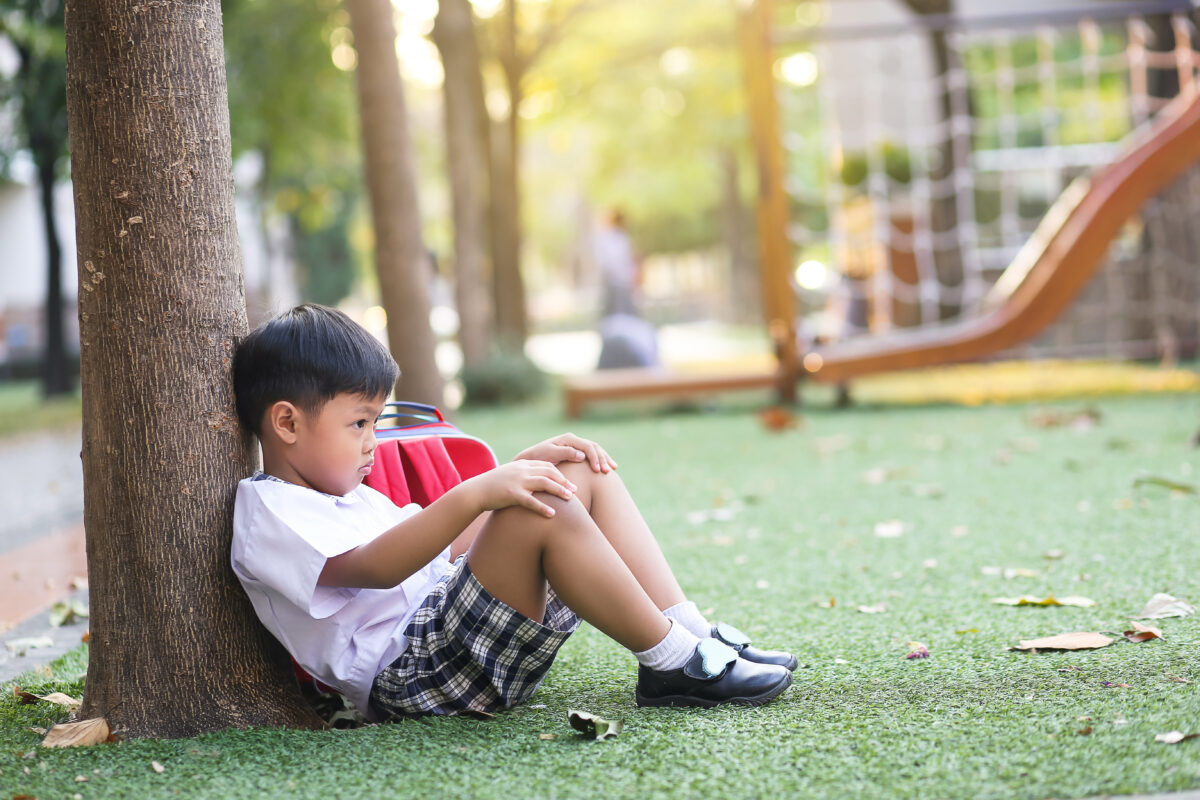
When a child enters first grade and fails to adapt, some may frequently express their longing for their mothers at school and even experience a loss of appetite. Parents are concerned about their child’s anxiety and may continuously tell them, “As long as you do your best, Mom doesn’t care about grades!” But does this approach effectively address the child’s anxiety, or does it backfire?

First of all, parents need to understand that the transition from kindergarten to first grade is a significant change for a child. It truly takes a long time for the child to adapt. In the first-grade stage, the workload increases, rules become stricter, and teachers are more demanding. Children may experience anxiety, leading to various physical symptoms or fear of going to school.

So, how much time does a child need to adapt? It actually varies from person to person. Generally speaking, more introverted or observant children are prone to anxiety, so it may take them a relatively longer time to adapt. Therefore, parents should first understand their child’s personality and temperament, adjust their expectations during this adaptation period, and never compare their child with other children.

Dr. Daniel Siegel, an American psychiatrist, has proposed a very useful method called “Name it to Tame it.” When parents observe emotional fluctuations in their children, they first use their left brain to analyze what might be happening with their child. Parents should use both their left and right brains, empathizing with the child’s feelings and situation, and then verbalize what they perceive the child is feeling. This is the “Name it” step.

For example, you can say to your child, “Are you feeling scared? Are you feeling worried? It seems like you have no appetite. Is there something you’re anxious about?” When we are able to express the child’s emotions, we are actually delineating what the child is experiencing in their right brain very clearly.

For older children, parents can encourage them to express their emotions themselves, and parents can respond to them. This connection between the adult’s and the child’s right brain helps stabilize anxious emotions. We refer to this process as “Connect.” After the connection is established, we can engage in conversation about other topics with the child.

However, parents should remember that when a child expresses their emotions, we must avoid saying things like, “Don’t worry, it’s silly, don’t think about these things,” or “You’re fine as you are, just do your best.” If we respond with our left brain, we cannot alleviate the right brain’s anxiety or bring calmness to the child’s midbrain responsible for emotions.

Lastly, when parents are able to use emotional vocabulary and verbalize what is happening in the child’s mind, it means transforming some of the emotions in the right brain into left brain cognition. This process is called “Redirect.” When we cognitively understand what we are experiencing and feeling, our right brain will find ways to solve the problem, which is referred to as “Problem Solving.”

The sequence mentioned above is crucial when dealing with a child’s anxiety and nervousness. Besides the order, parents also need to have patience. We need to be patient in helping the child understand their emotions so that we can come up with strategies together.